Proudly serving Phoenix, Mesa, Chandler, Scottsdale, Gilbert, Tempe & surrounding areasCall or Text 24/7: +1 (480) 916-7433

Rubber Flooring Installation in Chandler, AZ for Residential Gyms and Commercial Fitness Centers

Phoenix Rubber Flooring installs gym and home gym rubber flooring throughout Chandler, Arizona. We work with interlocking rubber tiles, rolled rubber flooring, rubber gym mats, stall mats, turf gym flooring, and commercial fitness flooring. Projects range from a 400 square foot garage conversion in Ocotillo to a 6,000 square foot fitness facility near the Price Corridor. Each floor is matched to the equipment load and how the room will be used.

Chandler summers can push garage and warehouse slab temperatures past 120 degrees, causing low-cost PVC mats to warp, off-gas, or pull apart at the seams within a season or two. High heat, low humidity, and monsoon dust also place extra stress on flooring designed for milder conditions. We assess the slab, prepare the subfloor, select material, and install the surface around those local demands. That process helps homeowners, trainers, and gym owners avoid buying a floor that was never rated for their equipment or environment.

Call us to discuss your space, equipment, and budget before buying material; after the site assessment, we provide a written quote before ordering.

5-star rating4.9/5 Average Rating - 20+ Years of Experience - Chandler Rubber Flooring Specialists - Residential & Commercial
Rubber Flooring Options

Gym and Home Gym Rubber Flooring Services

Chandler gyms call for different flooring formats based on load, moisture, room size, and whether the surface may need to be removed later. We install the options below across garages, weight rooms, studios, and commercial fitness facilities, with each material selected for the equipment it must support. The same core formats are available for projects in Scottsdale, AZ, but every slab and use pattern receives its own assessment.

Gym and Home Gym Rubber Flooring
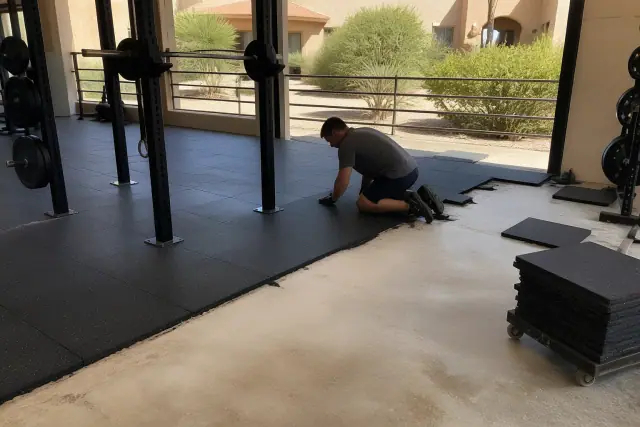
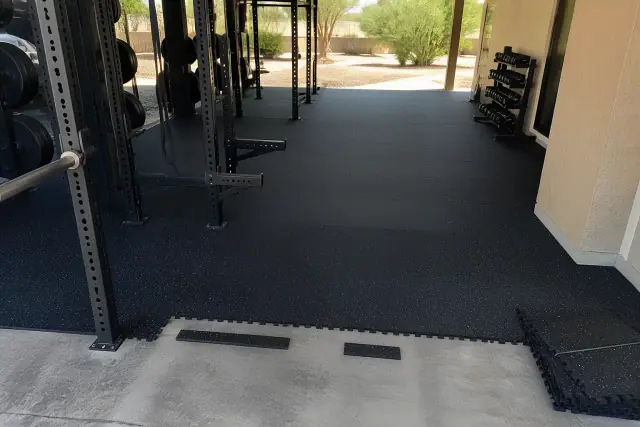
Technician installing heavy-duty rubber gym flooring on a concrete slab at a fitness center in Chandler, AZ.

We install rubber surfaces for free weights, cardio equipment, plyometrics, and turf sled work in garages, spare rooms, studios, and weight rooms. Available formats include rolled rubber, interlocking tiles, stall mats, and turf zones, with thicknesses from 3/8 inch to 1/2 inch and beyond for heavy Olympic lifting platforms. Explore Service

Explore Service
Garage Rubber Flooring Installation

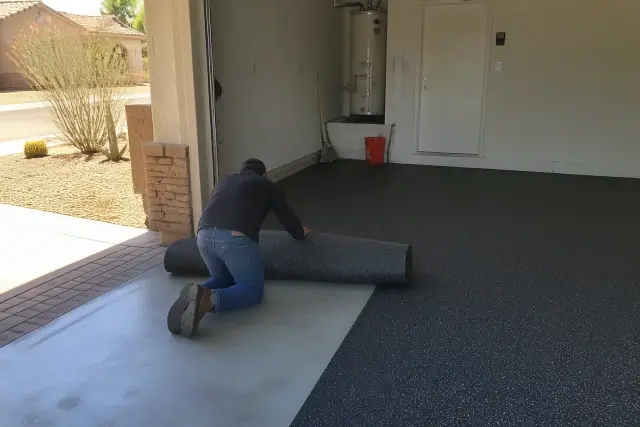
Worker installing rubber flooring on a concrete garage floor in a Chandler, AZ home.

Garage installations account for slab heat, dust, existing coatings, control joints, and the equipment going into the room. Most Chandler home gym projects span 150 to 500 square feet and typically finish in a single day, including subfloor preparation and trim work. Explore Service

Explore Service
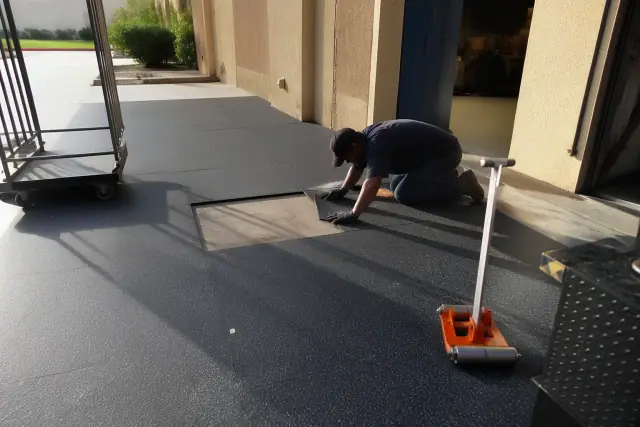
Basement Rubber Flooring Installation

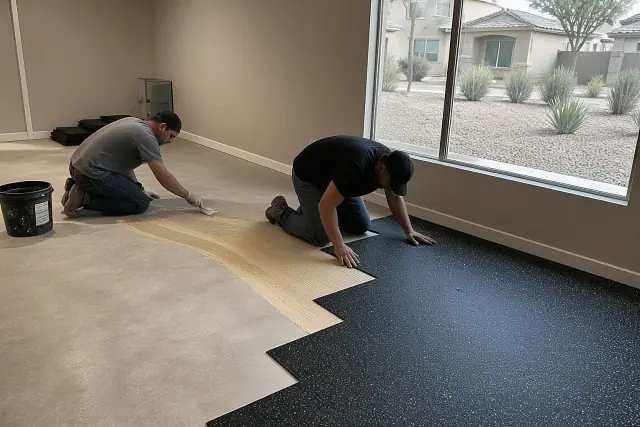
Contractors installing rubber flooring in a Chandler, AZ basement with residential homes visible through the window.

For a basement or converted lower-level weight room, we check the existing slab or hard floor for moisture, cracks, uneven areas, and coatings before choosing material. Interlocking tiles can be removed for multipurpose use, while rolled rubber gives larger rooms a smoother, easier-to-clean surface. Explore Service

Explore Service
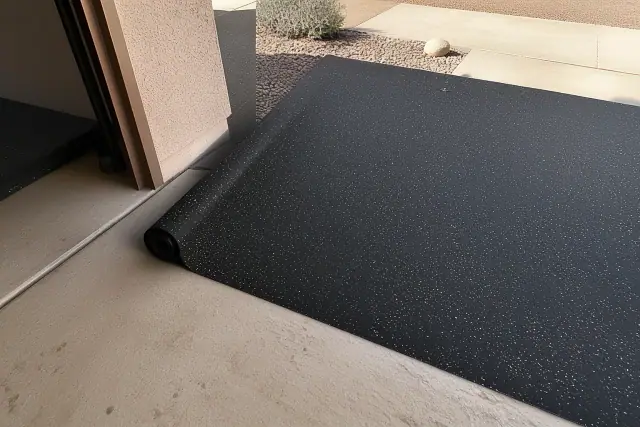
Rolled Rubber Flooring Installation

Contractor installing rolled rubber flooring on a concrete garage floor in Chandler, AZ.

Rolled rubber creates a continuous surface across larger weight rooms without the grid lines of tile systems. Standard rolls cover about 200 square feet, and 3/8 inch to 1/2 inch material can support heavy barbell work and rolling equipment carts when properly specified.

Rubber Floor Tile Installation

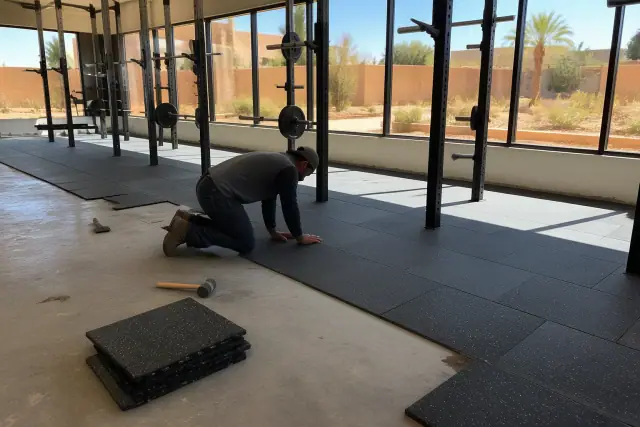
Technician installing heavy-duty rubber floor tiles over a concrete slab at a gym in Chandler, AZ.

Interlocking tiles fit garages and multipurpose rooms where a removable surface or simple future repair matters. Common panels measure 12.6 by 12.6 inches or 24 by 24 inches, while six-tile packs run around $25 and cover roughly 24 square feet; a damaged tile can be replaced individually.

Commercial Rubber Flooring

New rubber flooring installation with precise tile cuts at a fitness center in Chandler, AZ.

Commercial fitness floors use higher-density rubber selected for continuous traffic, machine weight, sanitation, and commercial-grade cleaning chemicals. Projects may combine rolled rubber in cardio and free-weight zones with turf lanes, with seams and transitions planned around ADA slip-resistance expectations and business hours.

Playground Rubber Surfacing

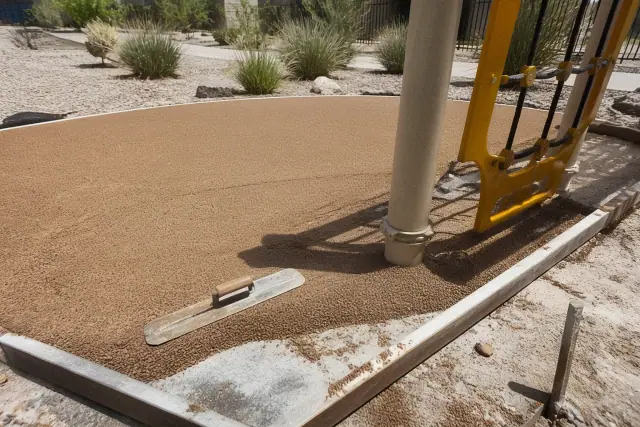
Technician troweling rubber playground surfacing around equipment in Chandler, AZ with desert landscaping.

Playground rubber surfacing requires a review of site use, subfloor condition, heat exposure, and desired impact performance before material is selected. The same disciplined preparation used for fitness floors helps determine whether a rubber surface fits the space and its loading conditions.

Industrial Rubber Flooring

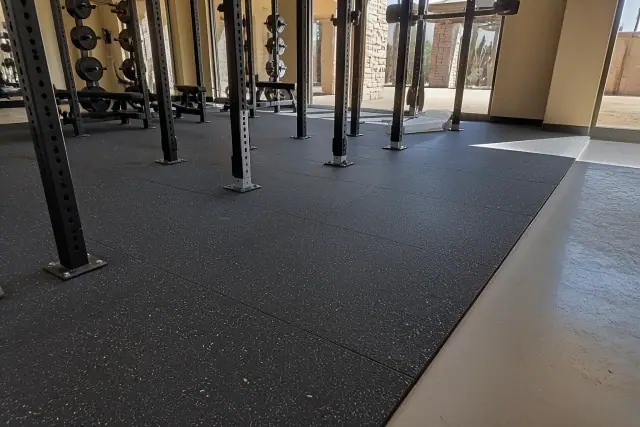
Technician installing heavy-duty rubber floor tiles in a gym with squat racks in Chandler, AZ.

Warehouse and industrial rubber flooring must be selected around slab temperatures, point loads, rolling carts, foot traffic, and cleaning routines. We assess those conditions before recommending a material density, thickness, and seam layout.

Anti-Fatigue Rubber Flooring

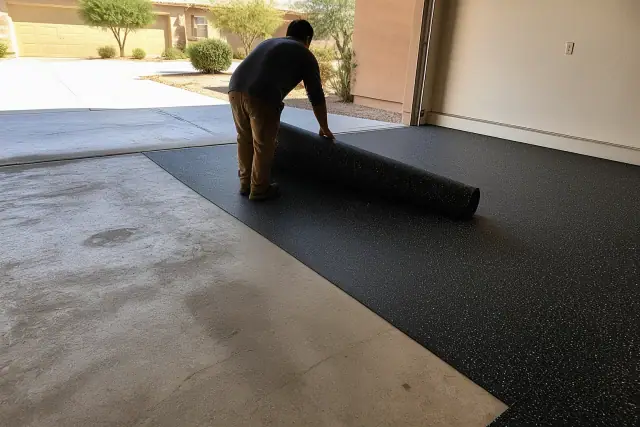
Worker unrolling sheets of black anti-fatigue rubber flooring on a concrete garage floor in Chandler, AZ.

Anti-fatigue rubber flooring is intended for standing and work zones rather than barbell-drop areas. We evaluate traffic, equipment, cleaning, and heat exposure so the selected surface matches how the area is actually used.

Rubber Flooring Repair and Replacement

Contractor repairing industrial rubber flooring at a warehouse loading dock in Chandler, AZ.

We repair seam separation, tile shifting, and localized wear around squat platforms or machine feet, often without removing the entire floor. When material is compressed, cracked, or no longer suited to heavier equipment, we remove the affected flooring, inspect the slab, and match the replacement to current use.

Material Selection

How to Choose Rubber Flooring for a Chandler Gym

Start with the equipment, room, slab, and climate rather than a product name. The gym rubber flooring market was estimated at roughly $1.82 billion in 2025 and projected toward $3.14 billion by 2034, so a growing range of products can obscure the few choices that control performance. These six factors help narrow the material and installation approach for a Chandler space.

Equipment Load and Impact

A treadmill needs less cushioning than a squat rack or Olympic lifting platform. Material density and thickness should be set around repeated dumbbell drops, loaded barbells, machine feet, and sled work rather than square footage alone.

Room Size and Layout

Interlocking tiles suit smaller or multipurpose rooms where the floor may need to come up, while rolled rubber reduces grid lines across larger spaces. Columns, doorways, wall edges, cardio zones, platforms, and turf lanes all affect the layout and trim plan.

Thickness and Density

General home gym use often fits 3/8 inch rubber, while regular barbell drops may call for 1/2 inch material or roughly 3/4 inch stall mats. Lighter yoga and stretching areas can use foam near the 8mm range, but soft foam can compress permanently under concentrated weight.

Slab Moisture and Condition

Concrete usually does not need a separate underlayment because rubber supplies its own cushioning, but the slab still needs inspection. Cracks, moisture, uneven patches, control joints, sealants, and old coatings should be addressed directly before flooring covers them.

Heat and UV Exposure

An uninsulated Chandler garage creates more thermal cycling than a climate-controlled studio. Rubber rated for garage or outdoor exposure handles expansion and contraction better than interior-grade foam or thin PVC that can shrink, curl, crack, or separate in severe heat.

Cleaning and Maintenance

Monsoon dust settles into textured flooring, so Chandler garages benefit from denser, lower-porosity rubber that is easier to maintain. Commercial spaces also need material that tolerates daily sanitation and the cleaning chemicals used by the facility.

Chandler Flooring Issues

Common Rubber Flooring Problems

Early failures usually trace back to a product that did not match the heat, load, slab, or maintenance demands of the room. A site assessment identifies those risks before installation and helps isolate repairable damage in an existing floor.

Request Floor Assessment

Heat-Driven Warping and Seam Gaps

Low-cost PVC and interior-grade foam can curl, crack, or pull apart as a hot garage slab expands and contracts. Heat-rated rubber and a layout that accounts for thermal movement reduce stress at edges, control joints, and seams.

Permanent Compression Under Heavy Loads

Soft foam tiles can stay compressed beneath a barbell platform, power rack, or machine feet. Flooring selected for the actual point load protects the concrete below and avoids uneven spots around equipment.

Slab Moisture, Cracks, and Unevenness

Moisture, cracks, low spots, and existing sealants can undermine adhesives, telegraph through a surface, or leave transitions uneven. Testing and preparation address the concrete condition instead of hiding it beneath another layer.

Monsoon Dust in Textured Flooring

Fine desert particulate collects in open texture and seams after monsoon storms. A denser surface, well-fitted transitions, and a cleaning plan make a Chandler garage easier to maintain over time.

Seam Separation and Tile Shifting

Poor alignment, slab movement, rolling loads, or material that was not acclimated to the room can open seams and shift tiles. Localized sections can often be reset, patched, or replaced without tearing out the full floor.

Odor and Summer Softening

Lower-quality recycled rubber may have an initial odor that takes days to a couple of weeks to fade, and some lower-grade material can soften during peak summer afternoons before firming as temperatures fall. Higher-density, heat-rated rubber and proper preparation minimize those drawbacks.

Why Choose Us

Why Choose Phoenix Rubber Flooring in Chandler?

Chandler has grown into Arizona's fourth-most populous city, behind Phoenix, Tucson, and Mesa, bringing more home gyms, boutique studios, corporate wellness rooms, and commercial fitness buildouts. We pair local slab and climate knowledge with current Arizona licensing, recognized flooring standards, and support for installation, repair, replacement, and upgrades.

Current Arizona ROC Licensing

Phoenix Rubber Flooring holds current Arizona Registrar of Contractors licensing. That matters for commercial work subject to inspection and for homeowners who want the subfloor, material, and installation approach handled as one accountable project.

ASTM-Guided Material Selection

We follow ASTM International testing standards relevant to resilient and rubber flooring. ASTM F2772 addresses health-club-flooring performance such as impact attenuation and slip resistance, while static coefficient of friction benchmarks help inform material choices for fitness environments.

Installation and Repair Support

Support continues as equipment changes and floors wear. We can repair isolated seams or tiles, replace material that has reached the end of its service life, and upgrade thinner flooring when a gym adds heavier equipment.

Installation Process

Our Rubber Flooring Installation Process in Chandler

Each project moves from site assessment through preparation, layout, and installation. The sequence below keeps material decisions tied to slab condition, equipment load, room geometry, and the way the space will operate.

01.

Site Visit and Measurements

We measure the room and note walls, doorways, columns, equipment bases, control joints, and transitions. The visit also confirms how the room will be used and whether business hours affect scheduling.

02.

Slab Inspection

The subfloor is checked for cracks, moisture, unevenness, existing coatings, and sealants. Moisture testing is added where slab conditions warrant it so hidden issues can be handled before material arrives.

03.

Equipment and Load Plan

We confirm cardio machines, racks, free weights, lifting platforms, carts, and turf sled use. Those loads guide the choice between tiles, rolls, mats, turf, and the density or thickness needed in each zone.

04.

Written Quote and Material Order

After the format, thickness, prep, and layout are defined, we provide a written quote before ordering material. Travel and scheduling for larger commercial projects are discussed upfront as part of that scope.

05.

Subfloor Prep and Dry Fit

Installation day starts with cleaning and the agreed slab preparation. We dry-fit the layout and trim material around walls, columns, doorways, and equipment bases before final placement.

06.

Installation, Seams, and Transitions

We complete the field, align seams, and check transitions to reduce trip hazards in public-facing spaces. Most residential jobs finish the same day, while larger commercial installations may take two to three days depending on square footage and preparation.

Project Fit

Rubber Flooring Outcomes for Chandler Homes & Gyms

Case Study 1: A residential garage conversion gains a fitted surface around walls and doorways, with density chosen to protect the slab and equipment from the planned workouts.

Case Study 2: A commercial weight room can pair rolled rubber under cardio and free-weight equipment with turf lanes for functional training, while transitions support safe movement between zones.

Case Study 3: A damaged floor can often be restored by replacing a shifted tile, repairing a seam, or upgrading a concentrated load area instead of removing every section.

Plan Your Floor

Schedule a Chandler
Rubber Flooring
Consultation

Tell us about the room, concrete condition, equipment, traffic, and budget. We will assess the site, recommend a fitting material and thickness, and provide a written quote before material is ordered.

Rubber Flooring Help

FAQs About Rubber Flooring in Chandler, AZ

These answers cover material choice, thickness, cost, subfloor preparation, installation, repair, and Chandler service coverage. Final recommendations depend on the slab, equipment, room conditions, and intended use.

Call Our Flooring Team

For most Chandler home gyms, rolled rubber or interlocking tiles between 3/8 inch and 1/2 inch work well for cardio equipment and free weights. Rolled rubber provides a smoother surface for larger rooms, while tiles fit smaller or multipurpose spaces where the floor may need to come up; the final choice depends on equipment and load.

Rubber can have a stronger initial odor, weighs more, and costs more upfront than foam. In an uninsulated Chandler garage, lower-grade material may also soften during the hottest part of the day, so density, heat rating, ventilation, and subfloor preparation matter.

Rubber gym flooring typically runs $2 to $12 per square foot installed, depending on thickness, density, format, and preparation. Foam for lighter stretching or recovery use runs $1 to $4 per square foot, basic stall-mat stock starts near $0.99 per square foot before labor, and premium heavy-use tiles can cost around $4 per square foot or more. A written quote separates the material and labor for the actual space.

Most installations over a standard concrete slab do not need another underlayment because the rubber provides cushioning and moisture resistance. Cracks, uneven patches, coatings, or moisture intrusion should be addressed at the slab, while a thin foam or cork layer may protect existing tile or hardwood from scratching.

For dumbbells, kettlebells, and machines, 3/8 inch rubber handles many home-gym needs. Regular loaded-barbell drops may call for 1/2 inch material or a stall-mat layer, while lighter yoga and stretching areas can use thinner foam near 8mm. Thickness should follow the actual training style.

Properly installed and maintained rubber flooring can last 20 years or more, including under Chandler's heat cycling and monsoon humidity swings. Material density, subfloor preparation, traffic, cleaning, and attention to opening seams all affect the actual lifespan.

Interlocking tiles are reasonably DIY-friendly in a small room. Rolled rubber, stall-mat layouts, heavy-equipment areas, and commercial projects benefit from professional slab assessment, moisture testing, seam alignment, and transition work. A poor layout over an unassessed slab is a common source of early repair calls.

We install interlocking rubber tiles, rolled rubber, stall mats, heavy-duty gym mats, turf systems, and higher-density commercial fitness flooring. The format can vary by zone, such as rolled rubber under cardio and free weights with turf for sled work.

High slab temperatures create repeated expansion and contraction that can curl foam, crack thin PVC, and open seams in poorly matched flooring. Heat-rated rubber, correct acclimation, subfloor preparation, and a layout that accounts for movement perform better through those temperature swings.

We measure the space, inspect the slab for cracks, moisture, coatings, and unevenness, and confirm the equipment and traffic planned for each area. Those findings guide the flooring format, thickness, preparation, layout, and written quote.

Most residential projects finish the same day, including normal subfloor preparation and trim work. Larger commercial installations may take two to three days depending on square footage, slab preparation, layout, and scheduling around an open facility.

Often, yes. Shifted tiles, separated seams, and localized wear near platforms or machine feet can frequently be patched, reset, or replaced by section. A slab inspection determines whether the damage is isolated or points to a broader subfloor issue.

Rubber flooring can fit garage gyms, converted bedrooms, enclosed patios, weight rooms, CrossFit boxes, personal training studios, boutique fitness spaces, corporate wellness rooms, and multi-tenant facilities. The material and layout should change with the equipment, traffic, cleaning routine, and climate control in each property.

ASTM F2772 covers performance factors such as shock absorption and slip resistance for indoor sports and fitness flooring. Public-facing facilities also need seams and transitions planned around ADA access and slip-resistance expectations, along with materials that tolerate regular sanitation.

We serve Chandler locations including Ocotillo, Fulton Ranch, Downtown Chandler, the Price Corridor, areas near Tumbleweed Park and Chandler Fashion Center, and neighborhoods bordering Sun Lakes. Coverage extends through the East Valley to Gilbert, Tempe, Mesa, Ahwatukee, and Queen Creek, with larger commercial projects available across Maricopa County.