Proudly serving Phoenix, Mesa, Chandler, Scottsdale, Gilbert, Tempe & surrounding areasCall or Text 24/7: +1 (480) 916-7433

Rubber Flooring Installation in Surprise, AZ for Home Gyms and Commercial Training Spaces

Phoenix Rubber Flooring installs and supplies gym and home gym rubber flooring for homes, HOA fitness rooms, and commercial training spaces in Surprise, Arizona. Our options include rolled rubber sheets, interlocking tiles, gym and stall mats, and surfaces in use-specific thicknesses. We plan floors for weight rooms, cardio areas, CrossFit training, yoga, and dance. We also handle residential and commercial installation, repair, and replacement work.

Surprise properties commonly place training spaces over slab-on-grade concrete that carries summer heat, winter cold, vibration, and the force of dropped dumbbells. Bare concrete provides no cushioning and may crack or pit under repeated impact. Monsoon humidity swings can also bring slab moisture into the flooring decision, while shared walls and slabs make noise control important. That is why each project starts with site measurement, material selection, and subfloor planning around how the room will actually be used.

We work across Sun City Grand, Marley Park, Surprise Farms, Asante, Prasada, and the Original Town Site near the Surprise Recreation Campus, as well as communities throughout the West Valley. Call to discuss your room, equipment, training style, and installation needs.

5-star rating4.9/5 Average Rating - 20+ Years of Experience - Surprise Rubber Flooring Specialists - Residential & Commercial
Gym Flooring Services

Rubber Flooring Services in Surprise, AZ

From Sun City Grand and Marley Park to Surprise Farms, Asante, Prasada, and the Original Town Site, local training spaces include garages, HOA fitness rooms, and commercial facilities. Surprise grew from 30,848 residents in 2000 to 117,517 in 2010 and 143,148 by the 2020 census, adding more slab-on-grade spaces across northwest Maricopa County. We also work throughout the West Valley in Peoria, El Mirage, Waddell, Sun City, Youngtown, Litchfield Park, Glendale, and Buckeye. The same material and slab-planning questions are covered on our Mesa AZ location page.

Gym and Home Gym Rubber Flooring

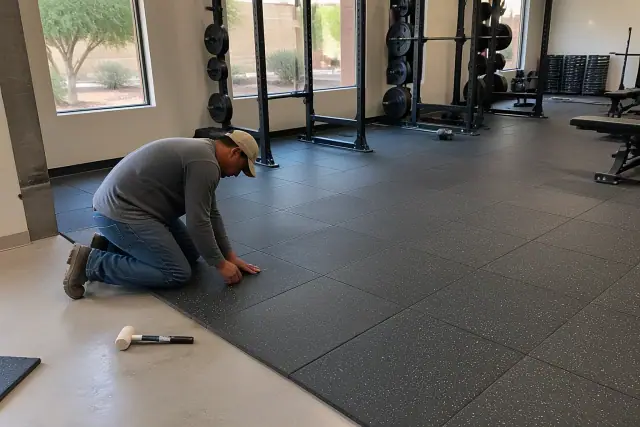
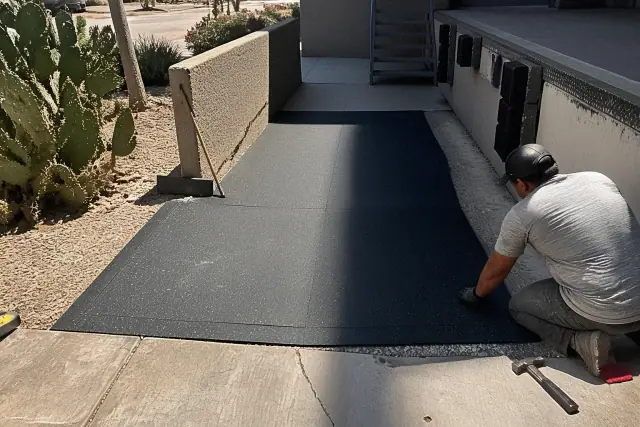
Technician installing rubber gym flooring on a concrete slab in Surprise, AZ.

We match rolled rubber, interlocking tiles, mats, and material thickness to the training style, equipment load, and room layout. Options cover weight rooms, cardio and CrossFit areas, yoga and dance studios, and full repair or replacement needs.

Explore Service

Garage Rubber Flooring Installation

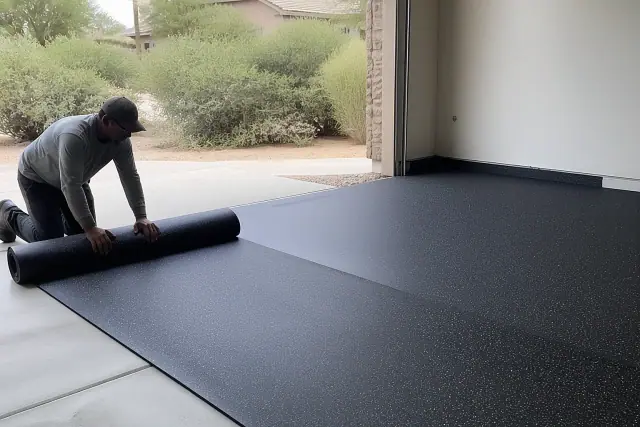
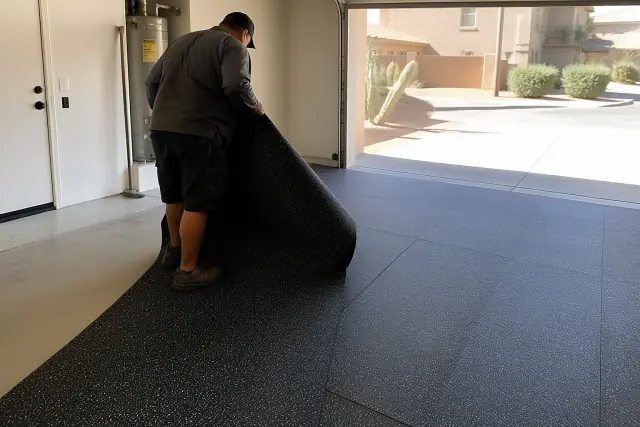
A worker installing rubber flooring on a concrete garage floor in Surprise, AZ.

Installation includes room measurement, material selection, subfloor preparation, cutting, seaming, and final fitting. We account for doorways, equipment footprints, drainage, odd angles, support columns, and transitions before placing rolls, tiles, or mats.

Explore Service

Basement Rubber Flooring Installation

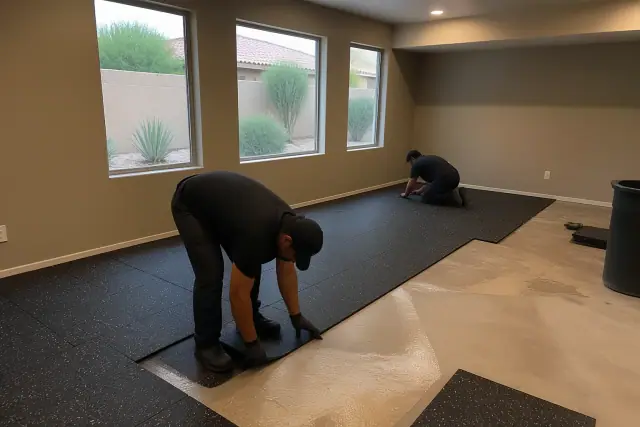
Crew installing rubber flooring in a basement recreational space in Surprise, AZ.

Repair work focuses on problems such as lifted seams, curled edges, and damaged areas that interrupt a level training surface. We evaluate the surrounding material so the corrective work fits the floor's layout and use.

Explore Service

Rolled Rubber Flooring Installation

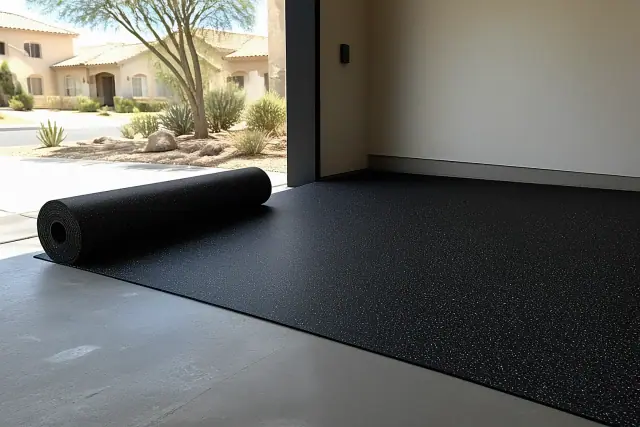
A contractor unrolling recycled rubber flooring on a concrete garage floor in Surprise, AZ.

Flooring maintenance starts with watching seams, perimeter edges, and high-traffic wear zones. A condition review helps identify where focused correction is appropriate and where broader replacement makes more sense.

Rubber Floor Tile Installation

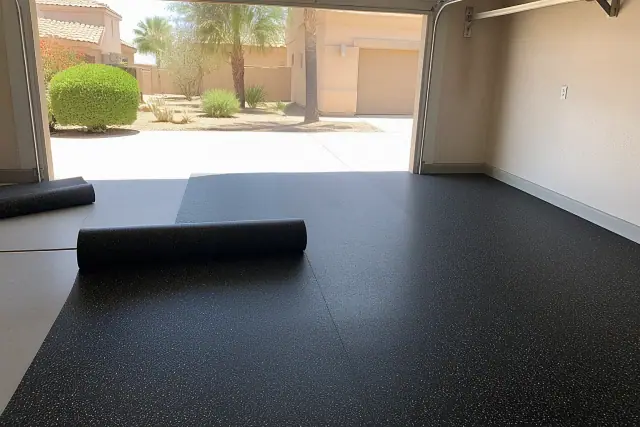
A worker installing recycled rubber flooring in a garage in Surprise, AZ.

When an existing surface no longer fits the room or training load, replacement can reset the layout with rolled rubber, tiles, or mats selected for current equipment. We plan removal and new material around the slab, transitions, and daily use.

Commercial Rubber Flooring

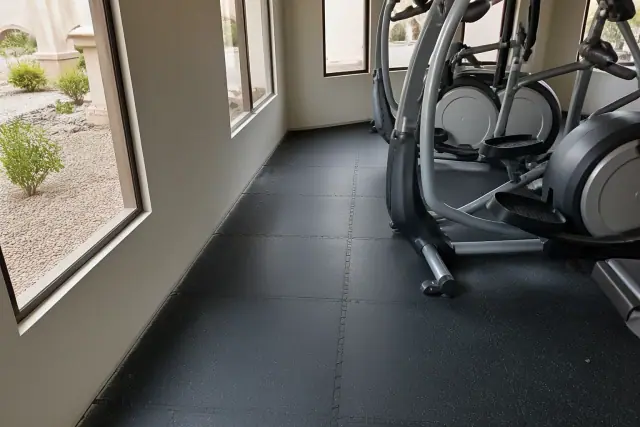
Interlocking rubber gym floor tiles installed in a commercial office space in Surprise, AZ.

A flooring inspection looks at the concrete slab, room dimensions, door clearances, drainage, equipment placement, and visible wear. Those observations guide the surface format, thickness, subfloor preparation, and installation plan.

Playground Rubber Surfacing

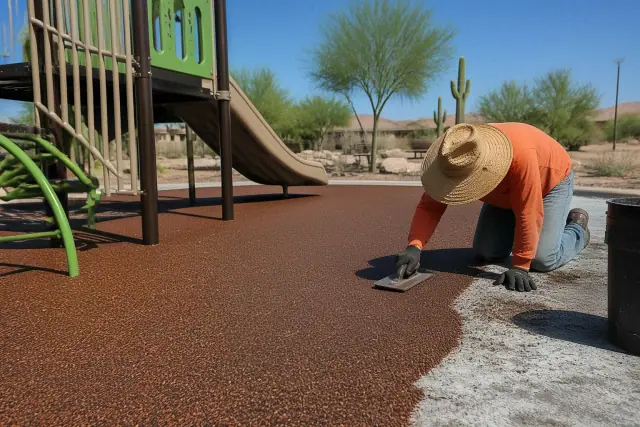
Technician applying rubber playground surfacing around equipment in Surprise, AZ.

Because caliche and slab-on-grade construction make garage conversions common in Surprise, residential work often centers on garages, spare rooms, patios, and casitas. We fit the floor to the room and select options intended to handle conditions ranging from a cold January morning to a 130-degree garage in July.

Industrial Rubber Flooring

Worker installing recycled rubber flooring in a garage in Surprise, AZ.

Commercial installation serves CrossFit boxes, physical therapy clinics, HOA fitness centers, weight rooms, and training facilities near Surprise Stadium. These projects may call for higher-durometer rubber, fire ratings suited to local review, high-traffic layouts, and coordination with facility managers or general contractors.

Anti-Fatigue Rubber Flooring

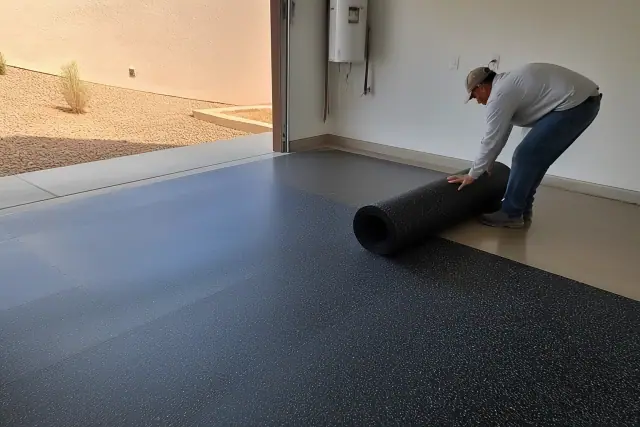
Worker unrolling anti-fatigue rubber flooring on a garage floor in Surprise, AZ.

Anti-fatigue rubber flooring can support standing workstations, service counters, workshops, and fitness support areas in Surprise. We choose density, surface texture, thickness, and beveled edges around traffic, equipment, cleaning routines, and desert heat exposure.

Rubber Flooring Repair and Replacement

Contractor repairing damaged industrial rubber flooring near a loading dock in Surprise, AZ.

We assess open seams, curled edges, adhesive failure, torn rolls, and damaged tiles before recommending repair or replacement. Localized work can restore compatible areas, while widespread heat, moisture, or wear damage may justify removal and a newly specified system.

Material Selection

How to Choose Rubber Flooring for a Surprise Gym

The right surface depends on what will happen above it and what condition exists below it. Training type, equipment load, slab condition, room temperature, traffic, and the need to reconfigure the space all shape the choice.

Training Use and Equipment

Free weights, cardio equipment, CrossFit movements, yoga, and dance place different demands on a floor. Start with the room's primary activities, then account for concentrated loads under racks, platforms, and machines.

Thickness for the Training Load

8mm flooring is the most requested thickness for home gyms with moderate weightlifting and dumbbell work. For heavier Olympic lifting or repeated dropped-weight training, 3/4-inch or thicker rubber provides more protection for the slab and equipment.

Rolled Rubber, Tiles, or Mats

Rolled rubber creates fewer seams across large rooms, while interlocking tiles can be removed and reconfigured without adhesive. Dense stall mats offer a budget-minded option under power racks and lifting platforms.

Slab and Room Conditions

Doorways, drainage, support columns, odd angles, and the concrete surface all affect the finished layout. Measuring and preparing around those conditions helps rolls and tiles sit flat through the usable area.

Temperature-Swing Performance

Garage gyms experience much larger temperature swings than conditioned rooms. Material selection and accurate fitting should account for summer heat and cold winter mornings so edges and seams remain part of the plan.

Commercial Facility Requirements

Daily traffic, higher-durometer material, fire-rating requirements, and installation scheduling matter in commercial facilities. Layouts also need to work around equipment zones and the specifications shared by facility managers and general contractors.

Surprise Flooring Challenges

Common Gym Flooring Problems on Concrete Slabs

Desert slab construction creates a specific mix of impact, moisture, temperature, and noise concerns. Identifying the dominant problem helps narrow the surface format, thickness, and preparation needed for the room.

Request Floor Assessment

Impact Damage to Concrete

Repeated dropped weights and jump training can crack or pit bare concrete. Rubber flooring absorbs part of that impact while creating cushioning between the training area and the slab.

Noise Through Shared Structures

Weights and equipment can transmit vibration through shared walls and slabs in tighter subdivisions. A use-appropriate rubber surface helps cut that transfer at the source.

Monsoon Moisture at the Slab

Concrete can sweat moisture when humidity shifts during the monsoon season. The slab and room conditions should be reviewed before material is fitted over the surface.

Temperature-Driven Floor Movement

Garage temperatures can move from cold winter mornings to intense summer heat. A material and layout poorly matched to those swings may be more vulnerable to movement at edges and seams.

Lifted Seams and Curled Edges

A lifted seam or curled perimeter can interrupt a level surface and catch equipment or foot traffic. The repair decision should consider the affected edge, adjoining material, and original installation.

Compression Under Heavy Equipment

Power racks and lifting platforms concentrate weight in small areas. Dense, high-durometer rubber is selected for these zones to resist permanent compression under load.

Why Choose Us

Why Choose Phoenix Rubber Flooring in Surprise?

We handle site measurement, material selection, subfloor preparation, and installation as one coordinated job. Recommendations are based on the space's actual training use, slab conditions, equipment, and layout rather than a single material for every project.

ASTM F2772 Sports Surfacing

We install materials rated to ASTM F2772, the industry standard referenced in the draft for rubber sports surfacing. That gives gym-floor selection a use-specific performance framework.

FloorScore Low-VOC Products

We source FloorScore certified low-VOC products for enclosed training rooms and garage gyms. That consideration is especially useful when a space remains closed during a 115-degree Surprise summer.

Licensed Installation and Follow-Through

Phoenix Rubber Flooring is licensed through the Arizona Registrar of Contractors. If a seam lifts or an edge curls after installation, we return to correct the installation issue.

Planned Installation

Our Rubber Flooring Process in Surprise

The process connects how the room is used with what the slab and layout require. Measurement, material selection, subfloor preparation, and installation stay within one coordinated project.

01.

Walk the Space

We review the room and discuss whether it will support free weights, cardio, CrossFit, yoga, dance, or mixed training. Existing flooring concerns and the intended equipment layout are documented.

02.

Measure the Layout

The room is measured around walls, doorways, equipment footprints, drainage, odd angles, support columns, and transitions. These dimensions guide material quantities and seam placement.

03.

Review the Subfloor

We assess the slab and identify preparation needs before rubber covers it. Moisture conditions, surface damage, and transition points remain part of the installation plan.

04.

Select Material and Thickness

Rolled rubber, interlocking tiles, or mats are matched to traffic, training style, equipment load, and flexibility needs. Thickness is sized to the actual use rather than treated as a one-size choice.

05.

Cut, Fit, and Install

Material is cut and fitted around the room plan, then laid, interlocked, or seamed according to the selected format. Attention stays on tight seams, level placement, and clean transitions.

06.

Review the Finished Floor

The completed surface is checked around edges, seams, doorways, and equipment zones. We also explain any layout considerations tied to how the space will be used.

Flooring by Space

Practical Outcomes for Training Spaces

Case Study 1: Garage Gym: A fitted rubber surface gives free-weight and dumbbell areas impact absorption while helping protect the concrete slab.

Case Study 2: Commercial Weight Room: Fewer seams in rolled rubber and a high-durometer specification support equipment movement, dropped weights, and daily foot traffic.

Case Study 3: Flexible Training Room: Interlocking tiles can be removed and reconfigured when a renter or gym owner changes the equipment layout.

Plan Your Gym Floor

Schedule a Surprise
Rubber Flooring
Consultation

Tell us about the room, slab, equipment, training style, and material format you are considering. We can walk the site, measure the layout, and build an installation plan around the way the space will be used.

Surprise Gym Flooring Help

FAQs About Rubber Flooring in Surprise, AZ

These answers cover the material, thickness, slab, and installation questions that commonly shape home and commercial gym floors in Surprise.

Call Our Flooring Team

Rolled rubber, interlocking tiles, and dense mats can all fit a garage gym. The right option depends on the room size, equipment layout, training style, slab condition, and whether the floor may need to be reconfigured.

8mm is the most requested thickness in the source draft for moderate weightlifting and dumbbell work. A room used for heavier Olympic lifting or repeated dropped weights may need a thicker surface.

The draft recommends stepping up to 3/4-inch or thicker rolled rubber for heavier Olympic lifting and dropped-weight training. The added thickness is intended to protect both the concrete slab and the equipment.

Rubber flooring absorbs impact from weights and jump training and helps shield the slab from cracking and pitting. Thickness and material density should be matched to the actual training load.

Rubber helps cut impact noise and vibration that can travel through shared walls and concrete slabs. The floor format and thickness should be selected around the equipment and movements that create the most impact.

Rolled rubber provides fewer seams across larger rooms, which helps where equipment is dragged or dropped. Interlocking tiles install without adhesive and are easier to remove or reconfigure when the layout changes.

Dense stall mats can provide a budget-minded gym surface, especially beneath power racks and lifting platforms. Proper trimming, level placement, and tight seams help them fit the room cleanly.

Garage gyms can move from cold January mornings to temperatures around 130 degrees in July. Material selection and fitting should account for those swings so seams and perimeter edges are planned for the environment.

The slab and room conditions should be reviewed before rubber is installed. Surface moisture, damage, drainage, and transition points can all affect the preparation and layout plan.

The draft identifies FloorScore certified low-VOC products as an option for enclosed gyms and garages. Low-VOC selection matters when a training space stays closed during intense summer heat.

ASTM F2772 is identified in the source draft as the industry standard for rubber sports surfacing. Phoenix Rubber Flooring installs materials rated to that standard.

Commercial projects may require higher-durometer rubber, fire ratings suited to local review, high-traffic layouts, and schedule coordination. The draft specifically includes CrossFit boxes, physical therapy clinics, HOA fitness centers, and training facilities.

Lifted seams and curled edges are part of the repair work described in the draft. The affected area and adjoining material should be evaluated to decide whether focused repair or replacement is appropriate.

The process includes a site walk, room measurement, material selection, and subfloor preparation. Doorways, equipment footprints, drainage, support columns, odd angles, and transitions are considered before cutting and fitting the surface.

The draft names Sun City Grand, Marley Park, Surprise Farms, Asante, Prasada, and the Original Town Site near the Surprise Recreation Campus. It also lists Peoria, El Mirage, Waddell, Sun City, Youngtown, Litchfield Park, Glendale, and Buckeye across the West Valley.