Proudly serving Phoenix, Mesa, Chandler, Scottsdale, Gilbert, Tempe & surrounding areasCall or Text 24/7: +1 (480) 916-7433

Playground Rubber Surfacing in Phoenix, AZ for Schools, Daycares, and Recreation Areas

Phoenix Rubber Flooring installs playground rubber surfacing for residential play areas, schools, daycares, parks, fitness spaces, and senior recreation areas in Phoenix, Arizona. Our options include poured-in-place rubber, bonded rubber, engineered rubber turf, and rubber mulch systems. Each surface is planned around the equipment layout, fall-height needs, and conditions found across the Salt River Valley.

Phoenix summers can push asphalt and concrete surface temperatures well past 140 degrees Fahrenheit, while monsoon downpours test drainage beneath the play area. We pair UV-stabilized EPDM or TPV wear layers with permeable aggregate or shock-pad bases to address heat, impact, and runoff. Certified system selection is matched to ASTM F1292 impact attenuation and ASTM F1951 accessibility requirements for the equipment and route being surfaced.

Custom color options, lighter blends for uncovered spaces, and seamless shaping around curves, ramps, and equipment footings help the finished surface work with the site. A site visit lets us assess existing grade, drainage, accessible routes, and the highest accessible point on each play structure before preparing a written scope.

Phoenix Rubber Flooring installs playground rubber surfacing across Phoenix, Scottsdale, Tempe, Mesa, Chandler, Glendale, and Peoria.

★ ★ ★ ★ ★4.9/5 Average Rating · 20+ Years of Experience · Thousands of Customers Helped · Licensed & Insured · Residential & Commercial

Playground Surfacing Options & Benefits

What Is Playground Rubber Surfacing?

Playground rubber surfacing is an impact-attenuating surface selected and installed around the certified fall height of play equipment. A poured-in-place system uses a shock-absorbing recycled SBR base beneath a colored EPDM or TPV wear layer bonded with polyurethane.

Because the material is mixed and troweled on-site, it can follow curves, ramps, borders, and equipment footings without the trip-prone seams common to modular surfaces. Bonded rubber, engineered rubber turf, and loose rubber mulch provide alternatives for sites with different accessibility, maintenance, and budget priorities.

For Phoenix properties, the specification also needs to account for intense UV exposure, accelerated binder set times, and sudden monsoon runoff. Permeable bases, UV-stabilized materials, and lighter color blends help the system respond to those conditions.

Benefits of Playground Rubber Surfacing

A correctly specified rubber surface combines fall protection, accessible movement, drainage, and manageable upkeep in one play-area assembly. The exact benefits depend on the material, base, thickness, and exposure at the site.

  • Impact attenuation matched to each structure's certified fall height
  • Firm, stable routes for wheelchairs, walkers, and strollers
  • Textured wear layers that remain slip-resistant when wet
  • Permeable construction that moves monsoon water away from equipment footings
  • Periodic rinsing and debris removal instead of annual loose-fill re-topping
  • Custom colors and patterns shaped around curves and ramps
  • UV-stabilized binders and granules selected for desert exposure
  • Lighter color blends that run cooler than dark rubber in direct sun
Playground Surface Services

Phoenix Playground Rubber Services

We install, resurface, and replace playground materials for residential, school, daycare, park, municipal, fitness, senior recreation, and aquatic settings. The service is selected around fall height, accessible-route needs, drainage, exposure, traffic, and maintenance expectations.

Poured-in-Place Rubber Surfacing

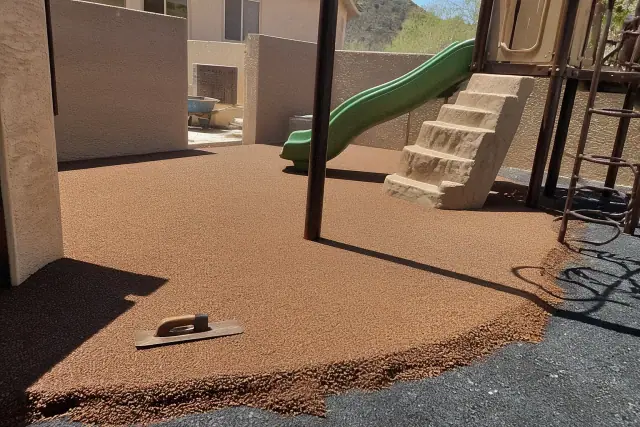
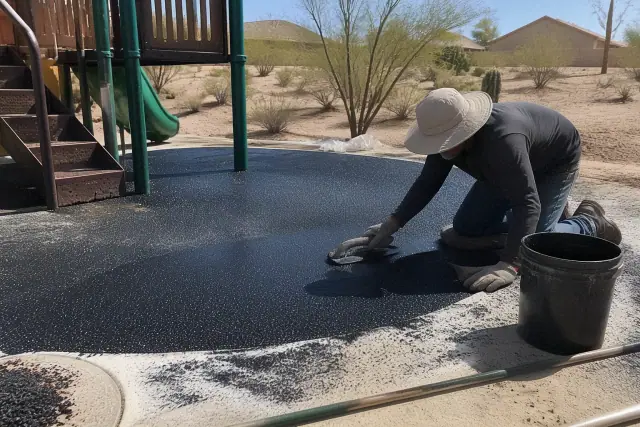
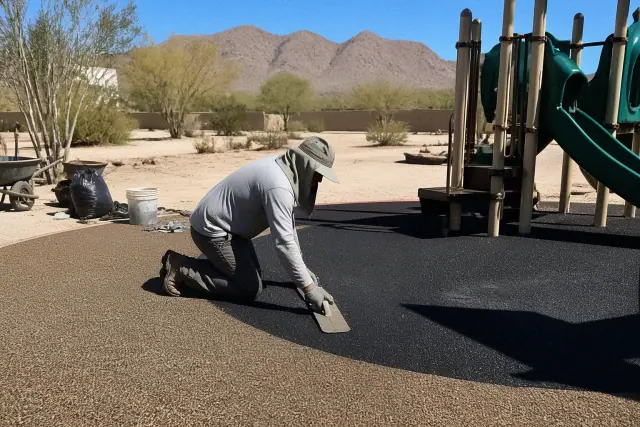
Technician troweling poured-in-place rubber surfacing around playground equipment in Phoenix, AZ.

Our poured-in-place installations combine a troweled SBR impact layer with a colored EPDM or TPV wear layer. The seamless surface is suited to continuous accessible routes and detailed layouts around equipment, curbs, ramps, and play-zone graphics.

Request Estimate

Bonded Rubber Playground Surfacing

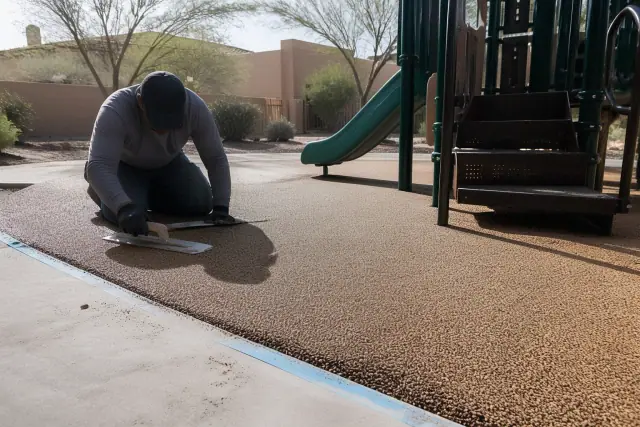
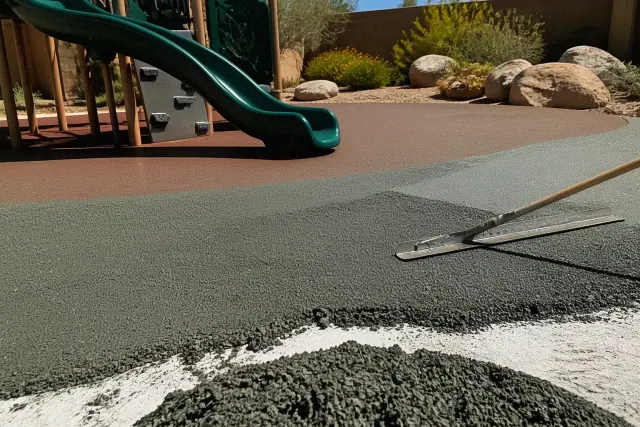
A technician troweling bonded rubber surfacing around playground equipment in Phoenix, AZ.

Bonded rubber uses polyurethane binder to hold rubber nuggets in a permeable single layer. It offers a more budget-conscious alternative to a full poured system, though high-traffic zones generally show wear sooner.

Request Estimate

Engineered Rubber Turf

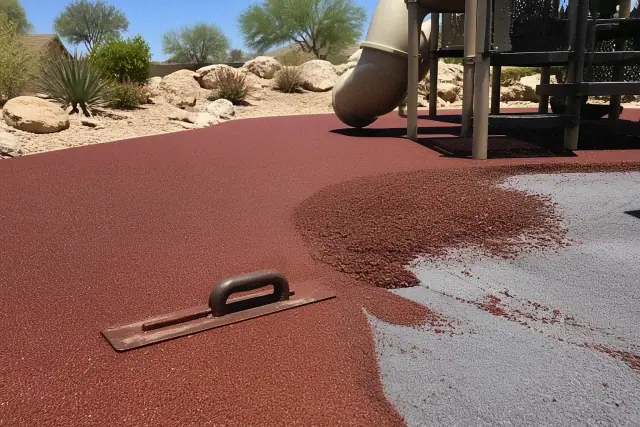
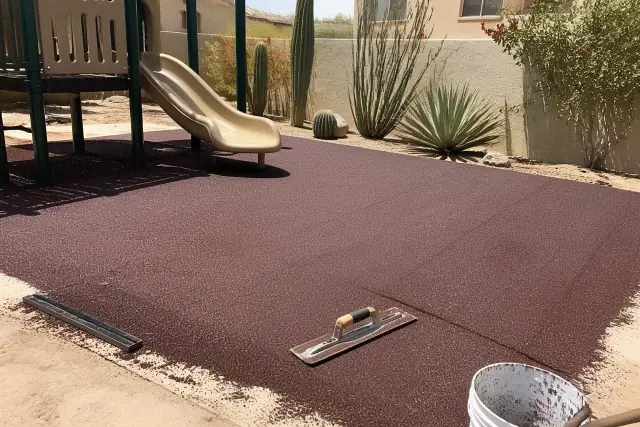
Technician troweling engineered rubber turf for a playground surface in Phoenix, AZ.

Engineered rubber turf is installed over a permeable aggregate or shock-pad base sized to the equipment's fall-height requirements. It provides a firm, stable, slip-resistant route through play areas while allowing drainage beneath the finished surface.

Request Estimate

Rubber Mulch Playground Surfacing

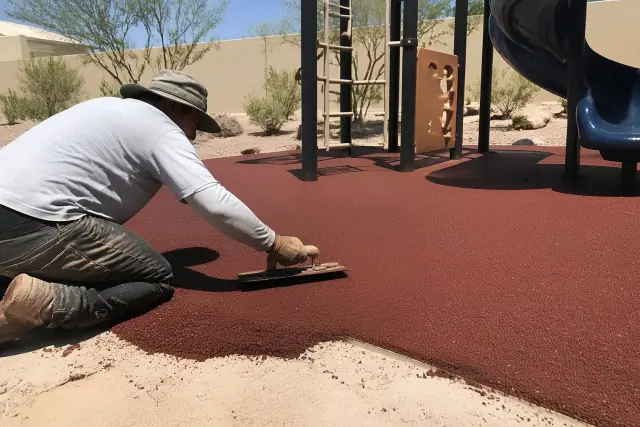
Technician installing rubber mulch playground surfacing in Phoenix, AZ.

Loose recycled rubber mulch offers the lowest upfront-cost option and provides impact protection when maintained at the required depth. It needs regular raking, leveling, and topping because active play can compact and scatter material away from critical fall zones.

Request Estimate

Playground Surface Repair and Replacement

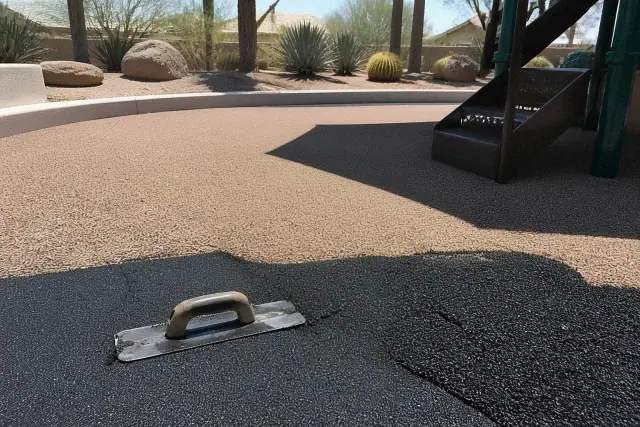
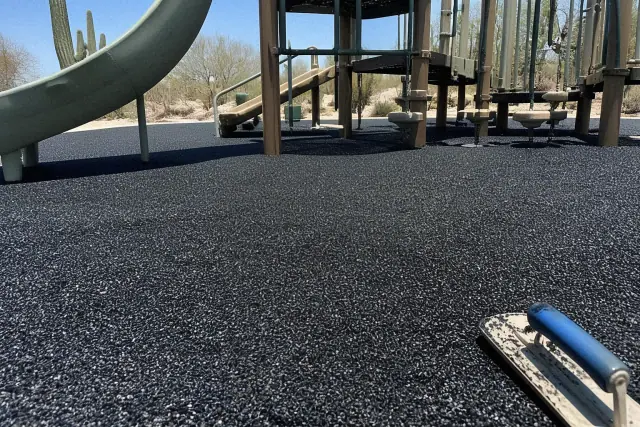
Technician troweling a rubber safety surface around playground equipment in Phoenix, AZ.

Localized cracks, separated seams, and minor bare spots may be repairable when the base remains sound. Widespread hardening, drainage failure, or thinning beneath multiple pieces of equipment can point to full resurfacing or replacement.

Request Estimate

Splash Pad Rubber Surfacing

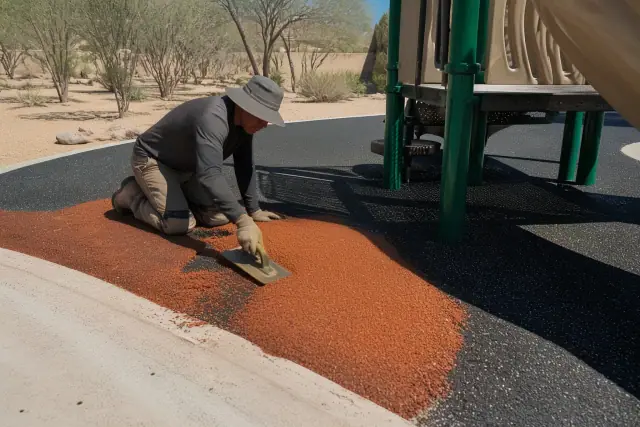
Technician troweling rubber granules for a playground safety surface in Phoenix, AZ.

Splash-pad surfacing uses bonded rubber specifications designed for constant water exposure, slip resistance, drainage, and repeated wet-dry cycling. We plan drainage slopes and binder selection for Phoenix parks and aquatic facilities with heavy summer foot traffic.

Request Estimate
Material and Surface Options

Types of Playground Rubber Surfaces

Each playground surface has a different balance of fall protection, accessibility, upkeep, design flexibility, and installed cost. Comparing the full assembly-not just the top layer-helps match the surface to the site's equipment and daily use.

Technician troweling rubber granules for a playground safety surface in Phoenix, AZ.

Poured-in-Place Rubber

Poured rubber is a continuous two-layer assembly troweled and cured at the site. Its base depth is engineered for impact performance, while the wear layer provides the final color, texture, and weather exposure.

  • Recycled SBR shock-absorbing base layer
  • Colored EPDM or TPV top layer
  • Wear layer typically 3/8 to 1/2 inch thick
  • Total depth typically 2 to 4.5 inches depending on fall-height rating
  • Seamless shaping around curves, ramps, and equipment footings
Request Estimate
Technician troweling bonded rubber surfacing on a playground in Phoenix, AZ.

Bonded Rubber

Bonded rubber combines rubber nuggets and binder in a permeable single-layer surface. It can fit projects that want a fixed rubber material with a simpler installation than a full poured-in-place assembly.

  • Rubber nuggets held in place with polyurethane binder
  • Permeable construction for runoff
  • Lower installed cost than poured-in-place rubber in many applications
  • Earlier wear possible in high-traffic zones
  • UV-resistant formulation needed for Phoenix exposure
Request Estimate
Contractor installing rubber playground surfacing near desert mountains in Phoenix, AZ.

Engineered Rubber Turf

Rubber turf pairs an engineered surface with a shock pad or permeable base selected for the play equipment. It is useful where an accessible, stable route and managed drainage are central to the design.

  • Shock-pad depth tied to certified fall height
  • Firm surface for accessible travel
  • Slip resistance in wet conditions
  • Permeable base and drainage planning
  • Transitions graded for wheelchairs, walkers, and strollers
Request Estimate
A technician trowels loose rubber mulch surfacing around play equipment at a park in Phoenix, AZ.

Loose Rubber Mulch

Loose rubber mulch is a recycled-rubber option with a low initial cost, but its performance depends on maintaining an even depth. CPSC guidance calls for roughly 12 inches of loose fill beneath equipment with fall heights up to 10 feet.

  • Recycled rubber material
  • Lowest upfront cost among the listed options
  • Regular raking and leveling required
  • Periodic topping needed as material scatters or compacts
  • Less reliable for firm, stable accessible routes
Request Estimate
Contractor troweling rubber playground surfacing on a jobsite in Phoenix, AZ.

EPDM and TPV Wear Layers

Wear-layer materials influence color, UV stability, texture, and long-term appearance. We use virgin and recycled rubber granules with aliphatic polyurethane binders, and we favor UV inhibitors built into the binder chemistry because surface coatings can wear away within a season or two.

  • EPDM and TPV granule options
  • Aliphatic binder selected to resist UV yellowing
  • Virgin and recycled rubber blends
  • Lighter and tan-toned colors for uncovered play areas
  • Custom color and pattern options
Request Estimate
Finding the Right Fit

Choosing the Right Playground Surface Approach

A site visit provides the information needed to compare surface types responsibly: equipment fall heights, current grade, drainage flow, accessible routes, subgrade conditions, traffic, and sun exposure. Phoenix Rubber Flooring then matches material depth and base design to those conditions rather than applying one specification everywhere.

Fall-Height-Specific Design

We calculate the impact layer for the highest accessible point on each piece of equipment instead of using a blanket thickness across mixed fall zones. Commercial scopes document the certified fall-height rating for the exact material and installed depth.

Phoenix Heat and Drainage Planning

Caliche-heavy soil, sandy fill, intense sun, and monsoon runoff can change how a playground base should be built. We inspect the subgrade, plan permeable drainage, schedule summer pours during cooler morning hours, and recommend lighter wear-layer blends for uncovered areas.

Written Scope and Documentation

Before installation, we provide a written scope that defines removal, preparation, base work, materials, depth, color, edge treatment, and fall-height documentation. Cost comparisons are broken down by square footage, thickness, and rating so different systems can be evaluated on equal terms.

What Sets Us Apart

Why Choose Phoenix Rubber Flooring for Playground Surfacing?

Our process connects the visible finish to the less-visible details that control performance: binder chemistry, granule sizing, base compaction, drainage, wear-layer thickness, and fall-height requirements. That approach supports residential backyards as well as schools, daycares, parks, municipalities, fitness areas, and senior recreation spaces.

Request Site Assessment

Excessive Surface Heat

Dark rubber can become significantly hotter than lighter blends under direct summer sun. Lighter EPDM colors, permeable construction, and shade planning can reduce peak heat compared with a dark, solid surface in full exposure.

Standing Water and Base Failure

Puddles that once drained within minutes can signal a failing grade or undermined base. Without a properly compacted permeable base, monsoon runoff can contribute to cracking within three or four monsoon seasons.

Compacted or Thinning Loose Fill

Mulch can scatter and compact beneath swings, slide exits, and other high-traffic areas. When material depth drops, the surface no longer provides the impact performance expected across the full fall zone.

Cracks, Brittleness, and Open Seams

UV exposure and poor binder specifications can harden the top layer, loosen granules, and open cracks along edges or seams. Visible damage may also indicate that impact attenuation below the wear layer has declined.

Mismatched Fall-Height Depth

A uniform surface depth can leave taller structures under-protected when a playground contains equipment with different fall heights. The impact layer needs to be calculated for each structure and extended across its required fall zone.

Unstable Accessible Routes

Loose sand, gravel, and unbonded mulch can shift under wheelchairs, walkers, and strollers. Poured rubber and rubber turf provide firmer travel when transitions and running slopes are graded to accessible-route requirements.

How It Works

Our Playground Surfacing Process

Every project starts with an on-site review and proceeds through preparation, drainage, layered installation, finishing, curing, and documentation. The sequence is adjusted to the existing surface, equipment layout, subgrade, and specified fall-height performance.

01.

Site Assessment

We inspect existing grade, drainage flow, soil and fill conditions, equipment fall heights, accessible routes, sun exposure, and the condition of any current surface. Those findings guide the base design, material choice, thickness, and written scope.

02.

Removal and Subgrade Preparation

Worn mulch, cracked rubber, or degraded turf is removed and hauled off before new work begins. We excavate to the required subgrade, correct the grade, compact the area, and set edge restraints.

03.

Permeable Base and Drainage

A permeable aggregate base is compacted to move monsoon water away from equipment footings and prevent standing water beneath the surface. Drainage direction and transitions are set before the rubber layers are installed.

04.

Impact Layer Installation

Recycled SBR rubber is mixed on-site and troweled across the fall zone at the thickness required for the equipment. Crews maintain consistent depth while shaping the base around posts, curves, ramps, and borders.

05.

Wear Layer and Edge Finishing

The EPDM or TPV wear layer is mixed with binder, poured in sections, and troweled for consistent color and texture. Edges are sealed against curbs, retaining walls, and equipment posts to limit water intrusion and lifting.

06.

Curing and Fall-Height Documentation

In Phoenix's dry heat, poured surfaces are typically ready for light foot traffic within 24 hours and full use within 48 to 72 hours. When ambient temperatures rise above 100 degrees, we schedule cooler morning pours to manage binder set time and finish quality. Commercial records identify the installed material, depth, and certified fall-height rating.

Plan Your Playground Surface

Schedule a Playground Surfacing Consultation

Request a site assessment to compare poured rubber, bonded rubber, engineered turf, mulch, repair, or replacement for your Phoenix-area play space. We will review fall heights, drainage, accessibility, materials, color, preparation, and the written project scope.

Playground Surface Help

Playground Rubber Surfacing FAQs

These answers cover cost, thickness, accessibility, heat, maintenance, replacement, materials, and installation details for Phoenix playground surfaces.

Call Our Surfacing Team

Standard single-color poured-in-place rubber typically runs $12 to $18 per square foot installed. Custom colors, patterns, or thicker fall-height specifications can raise that to $20 to $30-plus per square foot; bonded rubber generally costs less, and loose rubber mulch has the lowest upfront cost. Phoenix Rubber Flooring provides a written quote after a site visit based on square footage, required depth, preparation, and color.

Poured-in-place rubber typically lasts 10 to 15 years with correct installation and maintenance. Binder quality, UV stabilization, drainage, and the specified thickness all affect service life in Phoenix's intense sun.

Thickness is determined by the certified fall height of each structure. Equipment with a 6-foot fall height needs less impact-layer depth than equipment with a 10-foot fall height, and poured systems commonly range from 2 to 4.5 inches depending on the rating. We calculate the requirement on-site instead of using one thickness across mixed equipment.

Properly installed poured rubber and bonded rubber turf systems can meet ASTM F1951 requirements for a firm, stable, slip-resistant surface. Transitions and accessible routes also need to be graded so wheelchairs, walkers, and strollers can move through the play area without catching an edge.

Dark rubber can reach significantly higher temperatures than lighter colors in direct sun. Lighter EPDM blends, shade structures, permeable bases, and UV-stabilized binders help manage surface heat and reduce hardening or cracking.

Localized cracking, seam separation, or a minor bare spot may be patchable if the base is still sound. Widespread hardening, drainage failure, or thinning beneath multiple structures usually points to resurfacing or full replacement. We assess the existing base before recommending the scope.

A typical scope includes removal and haul-off of existing material, subgrade grading, permeable base and drainage work, impact and wear layers, edge sealing, and fall-height documentation. The final written scope is tailored to the site's equipment and existing conditions.

Phoenix's dry heat typically allows light foot traffic within 24 hours and full use within 48 to 72 hours. Temperature and humidity affect the timeline, and summer pours are scheduled in cooler morning hours when possible because high heat accelerates binder set time.

ASTM F1292 addresses impact attenuation for playground surfaces, while ASTM F1951 addresses accessibility. IPEMA certification independently validates a product's critical fall-height performance, and CPSC guidance informs fall-zone and loose-fill decisions.

Poured rubber offers a seamless two-layer surface with strong design and accessibility flexibility. Bonded rubber fixes nuggets in a permeable single layer and is generally more budget-friendly, while loose rubber mulch has the lowest upfront cost but requires frequent depth maintenance.

Poured and bonded surfaces need periodic rinsing, debris removal, and inspections of seams, edges, and high-traffic wear. Loose mulch requires additional raking, leveling, and topping to keep material at the specified depth.

A compacted permeable aggregate or shock-pad base allows runoff to move beneath the surface and away from equipment footings. The site grade, edge details, and drainage direction are set before the rubber layers go down so water is less likely to pool or undermine the assembly.

The impact layer typically uses recycled SBR rubber, while the wear layer uses colored EPDM or TPV granules bonded with polyurethane. Aliphatic binders resist UV yellowing better than aromatic binders, and UV inhibitors within the binder chemistry are preferred for sustained Phoenix exposure.