Proudly serving Phoenix, Mesa, Chandler, Scottsdale, Gilbert, Tempe & surrounding areasCall or Text 24/7: +1 (480) 916-7433

Rubber Flooring Installation in Scottsdale, AZ for Boutique Studios and Residential Gyms

Phoenix Rubber Flooring installs gym and home gym rubber flooring throughout Scottsdale, Arizona. Our crews handle residential and commercial gym floors, CrossFit surfaces, weight rooms, interlocking rubber tiles, rolled rubber, stall mats, vinyl gym flooring, foam gym flooring, and custom Olympic lifting platforms. We work in garage gyms, bonus rooms, boutique studios, fitness facilities, and other training spaces. Each installation is planned around equipment layout, impact zones, subfloor conditions, and the demands of desert heat.

Scottsdale garage slab surfaces routinely reach 110-120 degrees in summer, and repeated heat cycling can soften foam tiles or expose weaknesses in an unprepared subfloor. Direct UV, desert dust, and July-through-September monsoon humidity also affect material and adhesive selection. We check concrete for moisture vapor emission, review light exposure, and plan seams around the room and equipment footprint. That site-specific preparation helps rubber flooring stay flat, stable, and easier to maintain.

Scottsdale's population grew from 217,385 in 2010 to 241,361 by the 2020 census, while home gyms and boutique fitness spaces expanded across Maricopa County. We serve Old Town, the Airpark corridor, South Scottsdale near Papago Park, and North Scottsdale communities including DC Ranch and Troon.

5-star rating4.9/5 Average Rating - 20+ Years of Experience - Scottsdale Rubber Flooring Specialists - Residential & Commercial
Rubber Flooring Services

Rubber Flooring Options for Scottsdale, AZ

The right surface depends on the room, subfloor, equipment, traffic, impact level, and whether the layout may change later. We install complete gym floors as well as targeted surfaces for equipment and high-impact zones, and the same planning approach is available for projects in Gilbert, AZ.

Gym and Home Gym Rubber Flooring

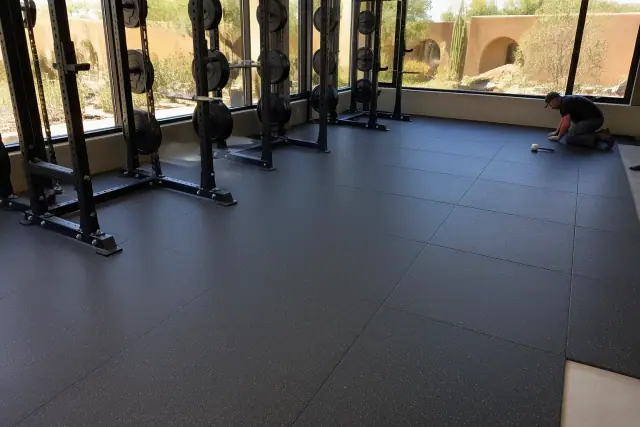
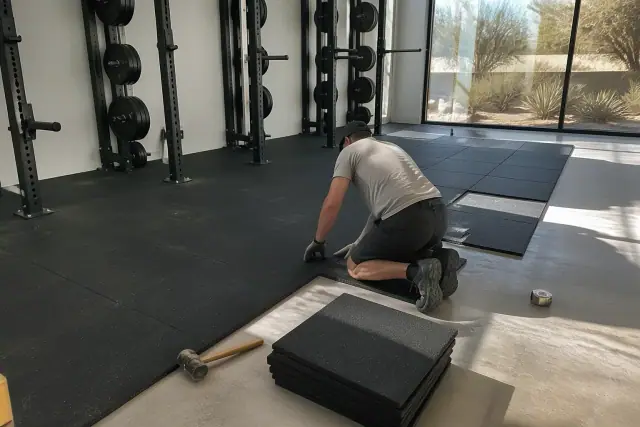
Technician installing rubber gym flooring over a concrete slab in a Scottsdale, AZ fitness facility.

Home gyms commonly use 8mm to 1/2-inch rolled rubber or interlocking tile, while dedicated lifting zones may need more impact protection. We measure the equipment footprint and account for cardio machines, racks, deadlift areas, and custom Olympic lifting platforms before recommending a layout.

Explore Service

Garage Rubber Flooring Installation

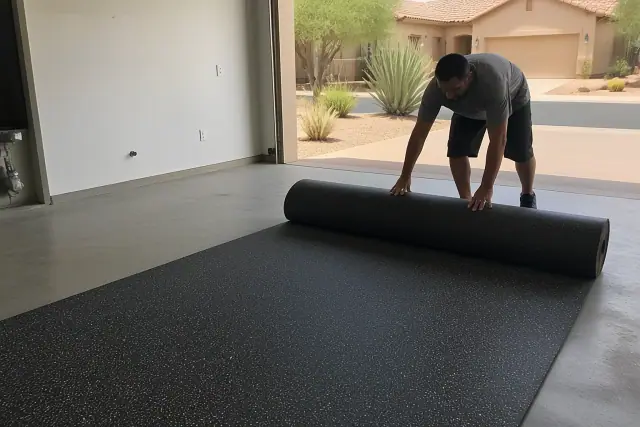
Worker installing recycled rubber flooring in a Scottsdale, AZ garage with desert landscaping visible outside.

Garage gym floors need materials selected for hot slab temperatures, sunlight through open doors, and dust carried in during monsoon season. We assess slab moisture, expansion joints, perimeter sealing, and whether a loose-laid, interlocking, or adhered surface fits the room.

Explore Service

Basement Rubber Flooring Installation

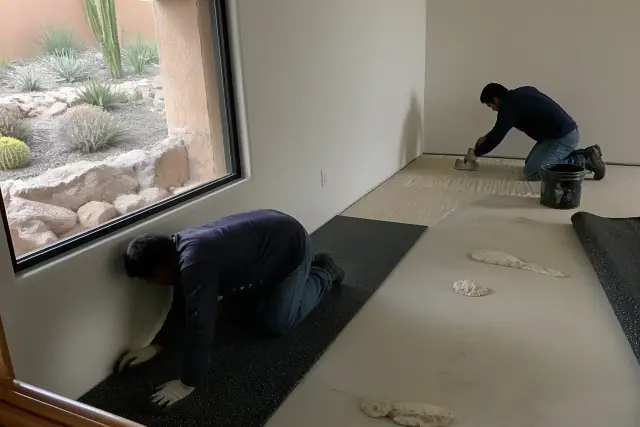
Crew installing rubber flooring on a concrete basement floor in a home in Scottsdale, AZ.

A basement gym may sit over concrete or a framed subfloor, so the installation method must match the structure below. We can plan anything from a treadmill mat area to a full-room rubber floor while accounting for level variance, equipment placement, and impact zones.

Explore Service

Rolled Rubber Flooring Installation

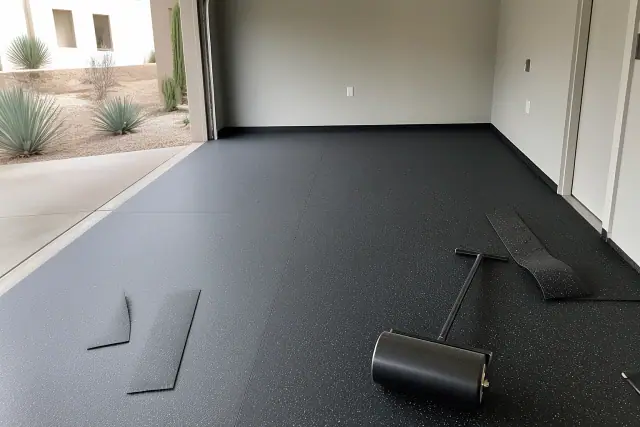
Rolled rubber flooring installed in a residential garage workshop in Scottsdale, AZ.

Rolled rubber creates fewer seams for commercial spaces and serious home gyms. Available rolls include 4-foot and 6-foot widths in thicknesses from 6mm to 1/2-inch, with loose-lay or double-glue installation selected according to the subfloor and occupancy needs.

Rubber Floor Tile Installation

Technician installing rubber floor tiles in a gym in Scottsdale, AZ.

Interlocking rubber tiles work well when a garage or training room may need to be reconfigured later. Modular puzzle-edge tiles typically range from 20mm to 3/4-inch thick and can often be installed without adhesive in a residential setting.

Commercial Rubber Flooring

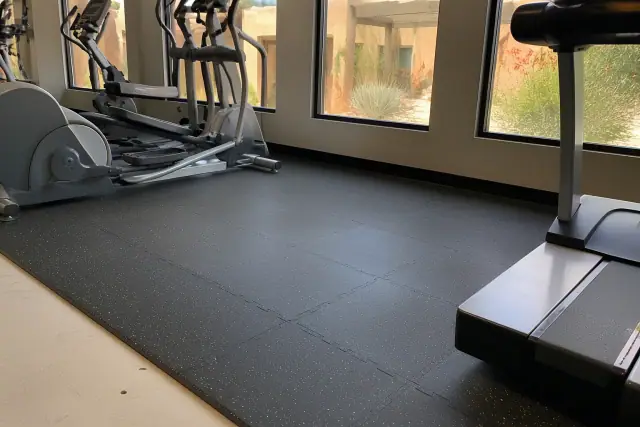
Interlocking rubber floor tiles installed in a commercial gym with cardio equipment in Scottsdale, AZ.

Commercial fitness floors must withstand daily foot traffic, dropped barbells, and equipment casters without shifting or delaminating. We commonly specify 3/8-inch, 1/2-inch, or 3/4-inch rubber by zone and consider ASTM F2772 impact attenuation guidance and National Floor Safety Institute high-traction ratings when selecting a surface texture.

Playground Rubber Surfacing

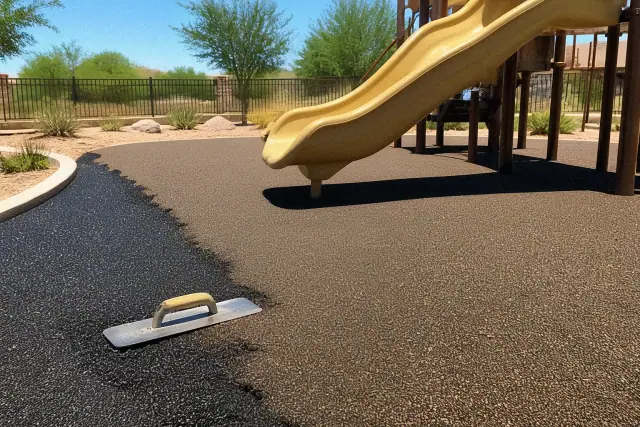
Contractor troweling rubber playground surfacing around play equipment in Scottsdale, AZ.

Outdoor playground rubber surfacing requires a site-specific review because direct sun, drainage, and the intended impact use all influence surface selection. We evaluate the area and installation conditions before recommending an approach for a Scottsdale property.

Industrial Rubber Flooring

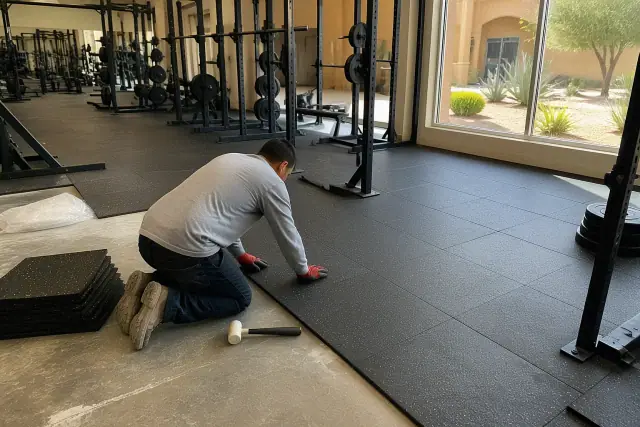
Technician installing heavy-duty rubber floor tiles in a Scottsdale, AZ fitness center free weight zone.

Industrial rubber flooring decisions begin with the traffic pattern, equipment loads, existing substrate, and maintenance demands of the work area. A site visit allows the surface and installation method to be matched to those conditions rather than selected from room dimensions alone.

Anti-Fatigue Rubber Flooring

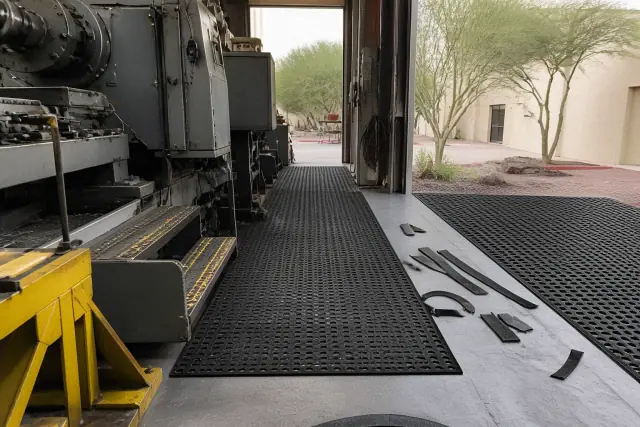
Anti-fatigue rubber flooring installed in an industrial facility in Scottsdale, AZ with desert views outside.

Anti-fatigue rubber flooring can provide a resilient surface in work zones where people stand for extended periods. We review the substrate, slip-resistance needs, cleaning routine, and transitions to adjoining floors before proposing a material and layout.

Rubber Flooring Repair and Replacement

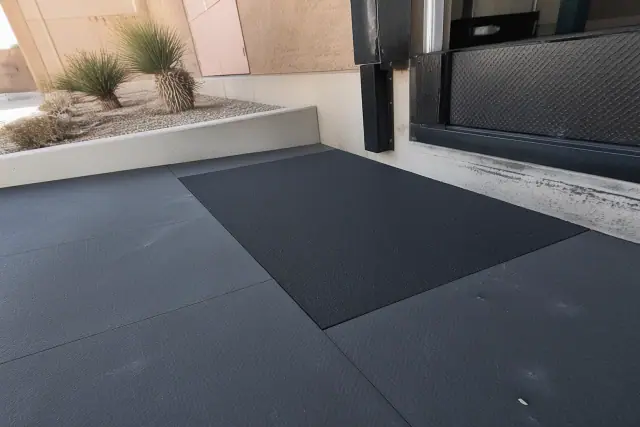
Rubber flooring repair near a concrete loading dock at a jobsite in Scottsdale, AZ.

Lifted seams, curling edges, damaged tiles, persistent odor, UV fading, and compression wear do not always require a complete teardown. We assess whether re-gluing, seam repair, targeted tile replacement, or full replacement is the sounder option for the existing floor.

Flooring Selection

How to Choose the Right Rubber Flooring in Scottsdale

The rubber fitness flooring market was roughly 1.82 billion dollars in 2025 and is projected toward 3.14 billion dollars by 2034, but the growing number of products does not make every option suitable for every room. Format, thickness, substrate, exposure, moisture, and layout should be considered together before material is ordered.

Flooring Format

Rolled rubber minimizes seams, interlocking tiles support future reconfiguration, and individual mats protect smaller equipment or transition zones. Mixed fitness facilities may combine rubber in weight areas, vinyl or sprung wood in yoga and Pilates spaces, and turf in sled lanes.

Thickness by Training Zone

CrossFit drop zones typically use 3/4-inch to 1-inch rubber while general training areas may use 3/8-inch. Weight rooms generally start at a 1/2-inch minimum in free-weight areas and can increase to 3/4-inch beneath platforms, while 8mm to 1/4-inch may suit lighter yoga, Pilates, or bodyweight use.

Subfloor Conditions

Concrete slabs, wood-framed upper floors, and existing commercial surfaces require different preparation and installation methods. Level variance, expansion joints, prior flooring removal, and the amount of vibration that can transfer to adjacent rooms all affect the specification.

Heat and UV Exposure

Heat-stable vulcanized rubber is suited to Scottsdale's swing from winter mornings near 40 degrees to severe summer slab heat. Direct sunlight through garage doors or windows also calls for UV-resistant compounds to reduce premature fading and brittleness.

Moisture Testing

A dry climate does not guarantee a dry slab because irrigation and monsoon runoff can move moisture near foundations. Testing for moisture vapor emission helps determine the appropriate adhesive, underlayment, and perimeter-sealing approach before rubber covers the concrete.

Layout and Seams

Rack anchors, machine footprints, doors, transitions, drainage points, and planned lifting platforms should be marked before the floor is cut. A chalk-lined layout, careful dry fit, correct adhesive, and seam rolling help prevent gaps, air pockets, and movement under load.

Scottsdale Flooring Issues

Common Gym Flooring Problems for Local Properties

Early flooring failure often starts with a mismatch between the material, substrate, exposure, and use of the room. These Scottsdale conditions can show up as softened tiles, hidden moisture, failed seams, persistent grit, transmitted impact, or sun damage.

Request Floor Assessment

Heat-Softened Flooring

Garage and patio gym surfaces can exceed 120 degrees in July and August. PVC-based foam tiles may soften, shift, or off-gas under that exposure, while an unsuitable adhesive can lose its bond and allow edges to lift.

Trapped Slab Moisture

Sudden humidity spikes and runoff during monsoon season can contribute to moisture beneath an improperly sealed floor. When moisture is trapped under the wrong adhesive or underlayment, odor and mold can develop along seams.

Separating Seams

Imprecise cuts, poor dry fitting, air pockets, or the wrong adhesive can leave seams that gap under equipment movement. Tiles can also curl at their edges when heat cycling and inadequate substrate preparation work against the installation.

Dust and Monsoon Grit

Desert dust can settle into deep-pile foam, reduce equipment traction, and make routine cleaning harder. A textured slip-resistant rubber surface sheds grit more readily, while perimeter sealing limits the places where dust can collect.

Impact and Vibration Transfer

Dropped plates, rack movement, sled pushes, and machine vibration can transfer force into the slab or nearby units. Adequate thickness, dedicated lifting zones, and under-equipment rubber padding help isolate that load.

UV Fading and Brittleness

Unstabilized rubber exposed to Arizona sun through windows or open garage doors can fade and become brittle faster. UV-resistant compounds are the better fit when direct light reaches the floor for part of the day.

Why Choose Us

Why Choose Phoenix Rubber Flooring in Scottsdale?

We are a locally owned gym flooring company focused on rubber flooring as a core trade. The team that evaluates the project carries the plan through installation, from moisture testing and adhesive selection to seam rolling, transitions, and final walkthrough.

Scottsdale Climate Knowledge

Projects from Old Town and the Airpark to areas near the McDowell Mountains face different combinations of heat, direct sun, dust, access, and slab conditions. We account for those local variables instead of applying one generic specification to every room.

Installation Specifications

Our installers carry current Arizona Registrar of Contractors licensing and follow manufacturer installation specifications to protect applicable material warranties. We also stay current on ASTM International exercise-flooring standards, OSHA slip-resistance guidance, and manufacturer certification programs.

Repair and Maintenance Support

With proper care, rubber flooring can last 20 years or more, and support can continue with seam repair, re-gluing, tile replacement, and assessments of UV or compression wear. Recycled rubber made with post-consumer tire material is also available when a client wants a lower-footprint flooring option without giving up durability.

Simple Process

Our Rubber Flooring Installation Process in Scottsdale

A measured on-site process lets us match the floor to the room before ordering material. The work moves from assessment and design through preparation, installation, cleanup, and a finished-floor walkthrough.

01.

On-Site Measurement

We visit the home or facility, measure the room, review equipment placement, and identify access or scheduling constraints. This creates an accurate footprint for material quantities, transitions, and lifting zones.

02.

Subfloor and Moisture Check

The assessment records slab moisture, level variance, expansion joints, existing floor conditions, and areas requiring removal or leveling. Those findings guide substrate preparation and adhesive selection.

03.

Material and Zone Planning

We compare rolls, tiles, and mats, then plan thickness, color, seams, and installation method by use area. Rig anchors, drainage, heavy equipment, UV exposure, and noise transfer are included in the layout discussion.

04.

Quote and Scheduling

After the design is approved, we order the selected material and schedule the work, typically within one to two weeks depending on custom color runs. Pricing is based on observed subfloor condition, material thickness, and layout complexity rather than a phone estimate.

05.

Preparation and Installation

Installation includes subfloor cleaning, chalk-lined layout, dry fitting, adhering or interlocking the surface to manufacturer specifications, and rolling seams to remove air pockets. Home workout floors commonly take one to two days depending on square footage and prep; many residential rooms finish in a single day, while larger commercial projects can take two to four days.

06.

Cleanup and Walkthrough

We remove old flooring and packaging, then inspect seams, transitions, and edge trim with you. If the material needs an adjustment after settling during the first few days, we return to address it.

Practical Outcomes

Rubber Flooring Outcomes for Homes & Fitness Facilities

Case Study 1: A home gym can combine a comfortable general-training surface with added thickness beneath racks, deadlift stations, or an Olympic lifting platform. That zoning protects the slab without forcing the thickest material across the entire room.

Case Study 2: A studio, physical therapy clinic, corporate wellness room, or training facility can coordinate rubber, vinyl, sprung wood, and turf while maintaining consistent transitions between zones. Sequenced installation helps the facility reopen on its planned schedule.

Case Study 3: An existing rubber floor with isolated lifted seams or damaged tiles may be restored through re-gluing, seam work, or targeted replacement. A full replacement is reserved for conditions that cannot be corrected soundly with a localized repair.

Plan Your Floor

Schedule a Scottsdale
Rubber Flooring
Consultation

Request an on-site visit to review your subfloor, equipment layout, impact needs, material options, and installation schedule. A measured assessment gives us the information needed to prepare a project-specific estimate.

Gym Flooring Help

FAQs About Rubber Flooring in Scottsdale, AZ

These answers cover material thickness, installation, climate exposure, maintenance, repair, and planning for Scottsdale gym floors. Final recommendations depend on the room, substrate, equipment, and intended use.

Call Our Experts

For most home gyms, 3/8-inch to 1/2-inch rubber works well for general strength training and cardio equipment. A dedicated deadlift or Olympic lifting zone usually calls for 3/4-inch to 1-inch rubber, while lighter yoga, Pilates, or bodyweight areas may use 8mm to 1/4-inch.

Rolled rubber gives a room fewer seams and is a strong fit for commercial spaces or permanent home gyms. Interlocking tiles are easier to remove or reconfigure and can often be installed without adhesive in a residential room.

Home workout flooring commonly takes one to two days depending on room size and subfloor preparation, and many residential rooms finish in a single day. Larger commercial fitness flooring projects may take two to four days.

Heat-stable vulcanized rubber is selected for garage spaces that experience severe slab temperatures and seasonal cycling. The floor still needs the right adhesive or interlocking method, perimeter details, and UV resistance for any area exposed to direct sun.

Irrigation and monsoon runoff can introduce moisture near a foundation even in a desert climate. Moisture-vapor testing helps us choose an appropriate adhesive, underlayment, and sealing plan before the slab is covered.

CrossFit drop zones typically use 3/4-inch to 1-inch rubber to absorb Olympic lifting impacts. General training areas may use 3/8-inch, with the final zoning based on equipment, rig anchors, slab conditions, and noise-transfer concerns.

Commercial specifications may account for ASTM F2772 impact attenuation guidance for exercise equipment flooring and National Floor Safety Institute high-traction ratings. Surface texture, thickness, equipment loads, and the manufacturer's installation requirements must also fit the facility.

Interlocking tiles can often be installed without adhesive in residential settings, which makes future removal or reconfiguration easier. The room size, perimeter, equipment loads, temperature, and subfloor determine whether a loose-laid installation is appropriate.

Stall mats are a cost-conscious option for heavy-impact zones and are typically 3/4-inch thick. They can cover a targeted area beneath racks or equipment when full-room premium flooring is not part of the current plan.

A polyurethane-based sealer is recommended every 12 to 18 months on porous rolled rubber, especially in garage gyms exposed to monsoon grit. Sealing helps block dust infiltration and simplifies routine cleaning.

In many cases, lifted sections can be re-glued, seams repaired, or damaged tiles replaced without a complete teardown. An assessment is needed to determine whether curling, gaps, odor, UV wear, or compression damage is localized or widespread.

Sweep or vacuum regularly, then damp mop with a pH-neutral cleaner. Avoid petroleum-based cleaners because they can break down rubber compounds over time, and watch high-load areas for compression wear.

Yes. A facility can use rubber in weight areas, vinyl or sprung wood in yoga and Pilates zones, and turf in a sled lane, with transitions planned for consistent height and safe movement between surfaces.

Direct UV through garage doors and windows can fade unstabilized rubber and make it brittle faster. A UV-resistant compound is the appropriate choice where sunlight reaches the floor regularly.

We measure the room, inspect the subfloor, check moisture and level variance, record expansion joints, and review the equipment layout. Material format, thickness, color, seams, and transitions are then discussed so the quote reflects the actual installation conditions.