Proudly serving Phoenix, Mesa, Chandler, Scottsdale, Gilbert, Tempe & surrounding areasCall or Text 24/7: +1 (480) 916-7433

Rubber Flooring Repair and Replacement in Phoenix, AZ for Commercial and Athletic Surfaces

Phoenix Rubber Flooring is a Phoenix, Arizona contractor for rubber flooring repair and replacement in gyms, schools, healthcare facilities, training centers, and commercial spaces. We patch punctures and cave-ins, repair lifted seams, complete full tear-outs, resurface poured-in-place floors, and install replacement tile. Our crews work with vulcanized rubber tile, rolled rubber, and poured EPDM/polyurethane surfaces. Every recommendation starts with the facility's traffic, equipment loads, and existing floor condition.

Phoenix heat, strong sun exposure, and monsoon-season moisture swings can stress rubber, adhesive bonds, and slab-on-grade subfloors. We moisture-test every slab before installation and evaluate flatness, old adhesive, transitions, and expansion areas. Our Arizona Registrar of Contractors licensing and commercial work practices follow Maricopa County Building Safety Department permit requirements. Clients receive a written assessment covering repair versus replacement, material grade, labor hours, and needed subfloor preparation before materials are ordered.

The assessment separates isolated surface damage from widespread wear or moisture-related failure, then compares a focused repair with full replacement. That keeps the scope tied to the floor's actual condition and the facility's operating needs.

Phoenix Rubber Flooring provides rubber flooring repair and replacement in Phoenix and across the surrounding metro area, including Scottsdale, Tempe, Chandler, Mesa, Glendale, and Peoria.

★ ★ ★ ★ ★4.9/5 Average Rating · 20+ Years of Experience · Thousands of Customers Helped · Licensed & Insured · Residential & Commercial

Repair or Replace: Understand Your Options

When Can Rubber Flooring Be Repaired?

Isolated seam lifting, small punctures, shallow gouges, and localized cave-ins are often good repair candidates when the surrounding material and slab remain sound. A focused repair preserves serviceable flooring and limits disruption to the rest of the room.

For a deeper failure, we cut back to solid material, open the area with a flat bar, brace the void with timber blocking, and rebuild the base with a manufacturer-specified compound and binder. The repair is capped with matched surfacing so its hardness, density, color, and texture fit the existing floor.

Full replacement is generally more practical when damage affects more than 20-25% of a room or when moisture intrusion has compromised the slab and adhesive across a wider area. The assessment also considers age, traffic patterns, equipment loads, and whether repeated spot repairs would cost more than a planned replacement.

Benefits of a Condition-Based Repair Plan

A condition-based plan directs labor and materials to the actual failure instead of treating every damaged floor the same. It can restore safety, extend usable life, and help facility managers plan downtime and replacement costs with clearer information.

  • Stabilize lifted seams and corners before they become trip hazards
  • Rebuild localized cave-ins without disturbing sound surrounding flooring
  • Replace individual modular tiles to keep more of the floor in service
  • Blend patch hardness, granule color, and texture with existing material
  • Correct moisture or adhesive problems that could cause repeat failure
  • Reinforce gym impact zones exposed to dropped weights and equipment
  • Add transition strips and perimeter expansion gaps where movement occurs
  • Coordinate repairs around gym, school, healthcare, or business operating hours
Repair & Replacement Services

Rubber Flooring Repair & Replacement Services

From a single loose tile to a complete tear-out, the repair method should match the material, failure pattern, and way the room is used. We service rolled rubber, modular tile, poured surfacing, impact zones, transitions, and base-layer failures across a range of Phoenix facilities.

Localized Rubber Floor Repair

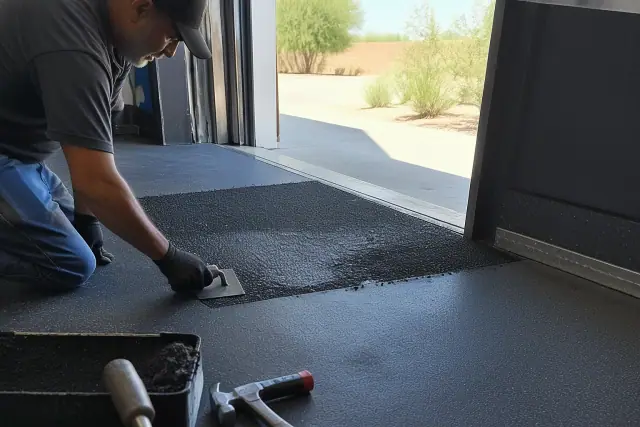
Contractor repairing industrial rubber flooring near a loading dock in Phoenix, AZ.

Small tears and lifted seams may be stabilized with adhesive injection or a targeted granule-and-binder patch. Larger cave-ins are cut back to sound material, rebuilt in thin lifts, and capped with surfacing matched to the surrounding floor.

Request Estimate

Complete Rubber Flooring Replacement

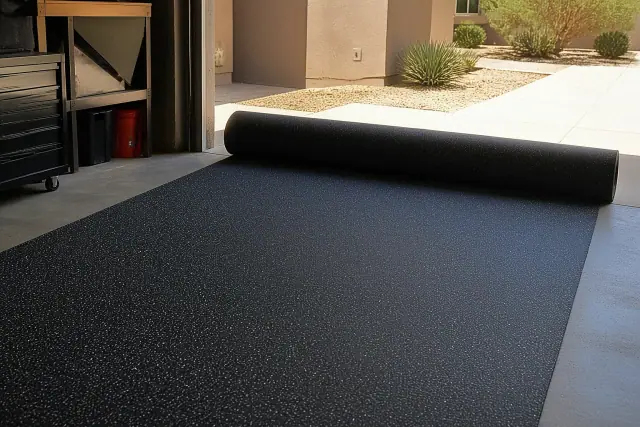
A worker unrolling sheets of recycled rubber flooring on a concrete garage floor in Phoenix, AZ.

When wear is widespread or the slab has broader moisture problems, we remove the failed surface, address adhesive residue and subfloor conditions, and install the selected rolled, tiled, or poured replacement. Square footage, traffic, cure time, and equipment loads guide the specification and schedule.

Request Estimate

Gym Flooring Repair

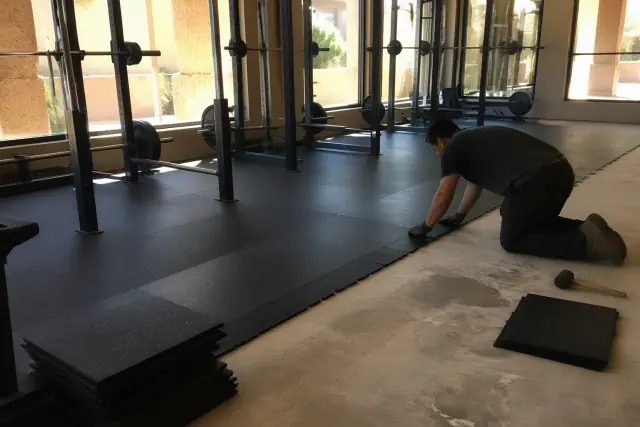
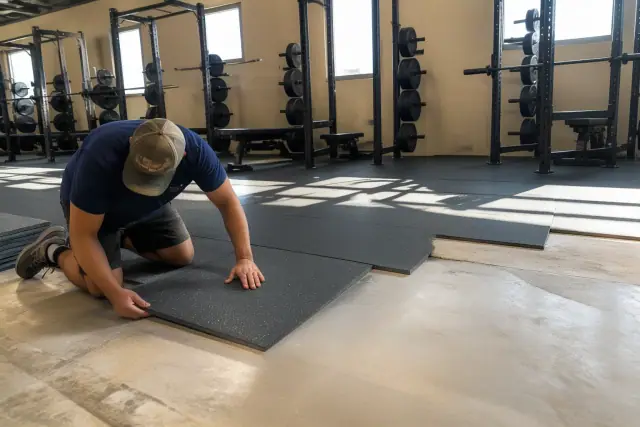
Technician installing rubber gym flooring tiles over concrete in a Phoenix, AZ facility.

Free-weight drop zones, squat racks, cardio equipment rails, and doorway transitions often show the first signs of compression and separation. We rebuild impact areas with higher-density rubber and recommend biannual seam and edge inspections for busy training facilities.

Request Estimate

Commercial & Institutional Flooring

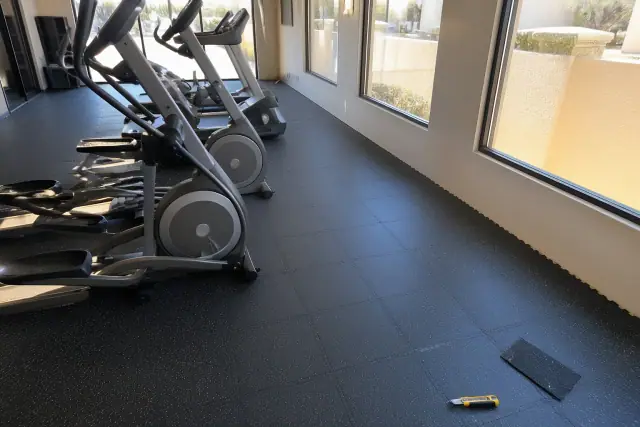
Installer fitting rubber floor tiles in a commercial gym in Phoenix, AZ, with cardio machines and tools nearby.

Warehouses, healthcare corridors, and school hallways need flooring selected for rolling loads as well as foot traffic. In loading areas and equipment rooms, thicker-gauge rubber-typically 3/8 inch or greater-and heat-welded seams can add several years of functional life in facilities running two or three shifts.

Request Estimate

Rubber Tile Replacement

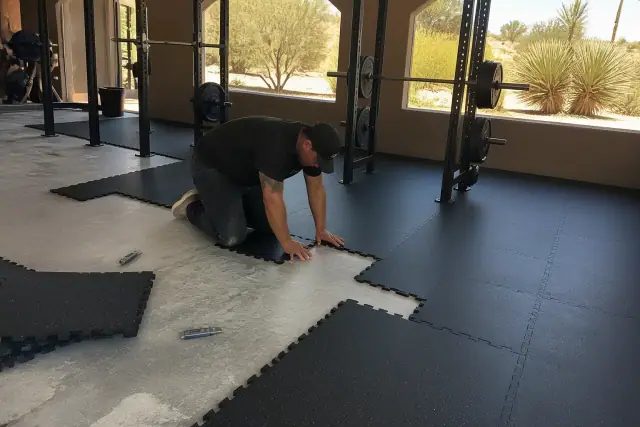
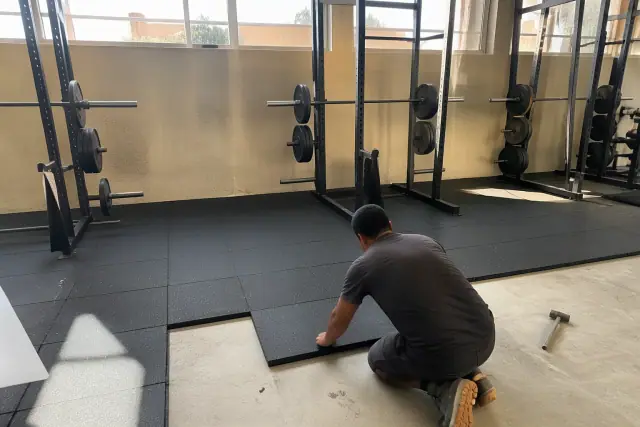
Technician installing interlocking black rubber floor tiles onto a concrete slab in a gym in Phoenix, AZ.

Modular tile allows one damaged section to be removed without disturbing the rest of the room. We use installation records, sample chips, and test blends to account for dye-lot differences and the visible color drift that sun-exposed sections can develop within 3-5 years.

Request Estimate

Poured-In-Place Resurfacing

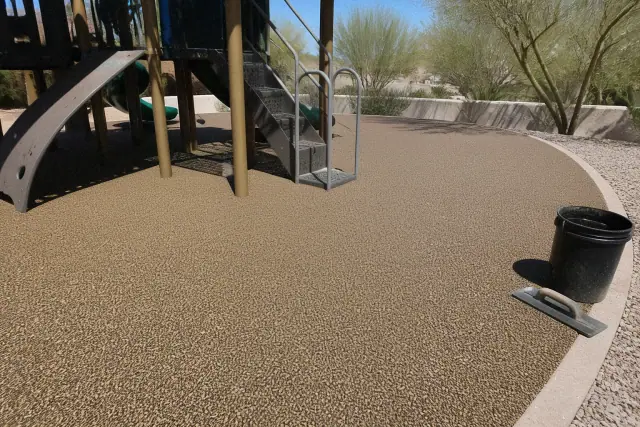
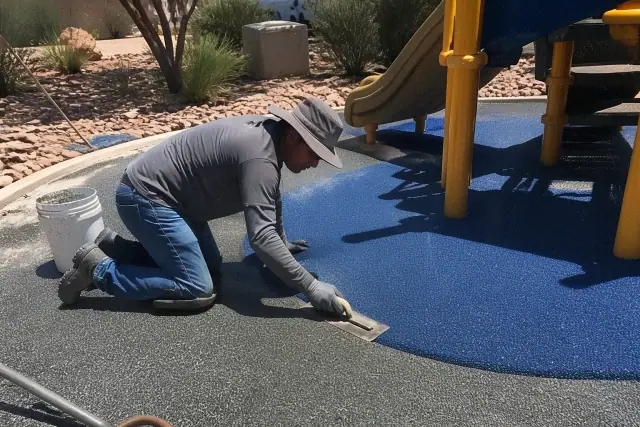
Poured-in-place rubber flooring repair with a trowel and bucket at a commercial playground in Phoenix, AZ.

Poured EPDM and polyurethane surfaces provide a continuous membrane without seams. For cracks or worn areas, we route back loose material, prime the exposed edge, match the granule-and-binder mix, and re-pour in lifts so the patch cures with the surrounding texture and hardness.

Request Estimate
Materials & Applications

Rubber Flooring Materials & Applications

Material choice affects repairability, seam performance, impact protection, maintenance, and total service life. We compare each option against the facility's traffic, rolling loads, sunlight, moisture readings, accessibility needs, and tolerance for downtime.

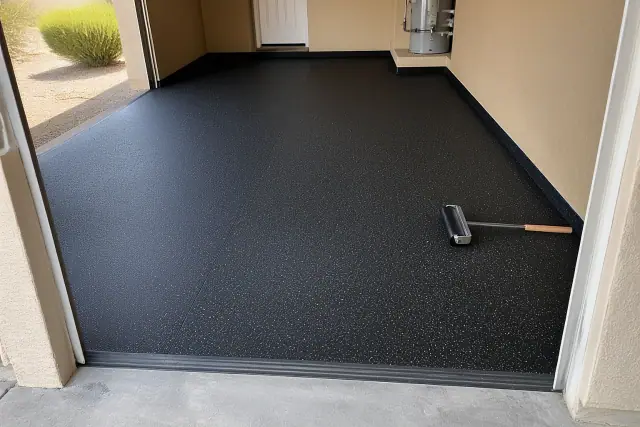
Black rubber flooring installed on a concrete garage floor in Phoenix, AZ.

Rolled Rubber Flooring

Rolled rubber creates broad coverage with fewer joints than modular tile, making it useful in corridors, locker rooms, and fitness spaces. Commercial roll flooring commonly provides 7-12 years of service, with seams and wear layers usually showing deterioration first.

  • Broad sheets reduce the number of field seams
  • Heat-welded seams suit loading and equipment areas
  • Seasonal checks catch lifting at edges and transitions
  • pH-neutral cleaning protects the natural surface
  • Damaged sections can be cut out and patched to sound material
Request Estimate
Technician installing heavy-duty rubber floor tiles in a Phoenix, AZ gym with squat racks.

Vulcanized Rubber Tile

Vulcanized rubber tile supports modular repair and detailed pattern layouts. When tightly glued or heat-welded rather than dry-laid, a properly installed system can last 10-15 years in moderate commercial traffic.

  • A single damaged tile can be replaced independently
  • Installed tile averages roughly $10 per square foot
  • Installation labor alone averages about $2 per square foot
  • A standard 144-square-foot room typically runs $800-$1,500
  • Dye-lot records and sample chips improve repair matching
Request Estimate
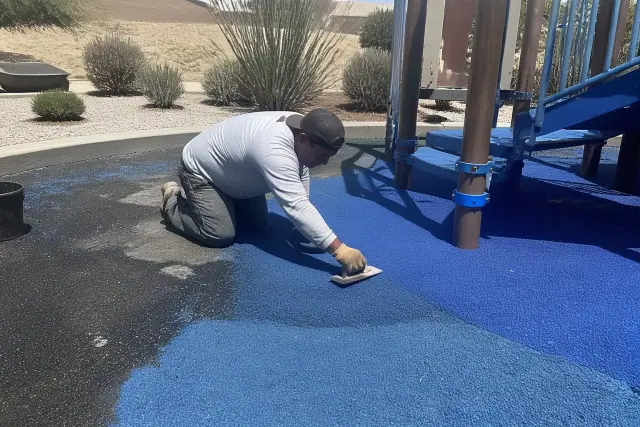
A technician troweling EPDM rubber flooring for a play surface repair in Phoenix, AZ.

Poured EPDM & Polyurethane

Poured EPDM/polyurethane forms a monolithic surface that avoids seam-related lifting and can be blended for specific texture and color. It is suited to healthcare, school, training, and other spaces where continuous coverage is valuable.

  • Installed surfacing runs closer to $16 per square foot
  • A comparable standard-size room is about $2,300
  • A maintained poured floor can provide 12-15 years of service
  • UV-stable urethane topcoats slow sun bleaching
  • Thin repair lifts help control trapped air and shrinkage
Request Estimate
Technician installing high-density rubber gym flooring onto a concrete floor in Phoenix, AZ.

High-Density Gym Flooring

Gym surfaces must balance traction, cushioning, and resistance to repeated point loads. Higher-density compounds can rebuild worn impact zones where dropped plates or equipment have compacted the original rubber.

  • Reinforce free-weight and squat-rack drop zones
  • Check cardio equipment rails for compression scars
  • Inspect doorways crossed by rolling carts
  • Restore consistent cushioning in damaged areas
  • Repair edge transitions before they become trip hazards
Request Estimate
Technician repairing rubber playground flooring with granules and binder in Phoenix, AZ.

Playground Fall-Impact Surfacing

Poured playground surfacing must support critical fall-height performance under ASTM F1292 and accessible wheelchair routes under ADA requirements. In Phoenix, lighter-colored topcoats can also reduce the heat absorption associated with dark rubber in direct sun.

  • Match surface depth to the required critical fall height
  • Restore smooth, accessible transition edges
  • Check drainage slope after monsoon-related erosion
  • Repair base damage beneath cracked or settled areas
  • Use UV-stable finishes suited to strong sun exposure
Request Estimate
Planning the Right Scope

Choosing the Right Repair or Replacement Approach

The right scope depends on more than the visible mark at the surface. Slab moisture, adhesive coverage, material age, traffic, rolling loads, UV exposure, and the size of the damaged area all shape whether a targeted repair, resurfacing, or full replacement offers the better path.

Moisture Testing & Slab Preparation

We test slab moisture using ASTM F2170, check flatness, and examine existing adhesive residue before installation. When readings require it, a vapor barrier or moisture-mitigating primer is included before new adhesive is applied.

Facility-Specific Material Planning

Square footage, traffic patterns, equipment loads, sunlight, and room use are documented before material is selected. That information guides thickness, density, seam method, color, transition details, and whether rolled, tiled, or poured rubber is the better fit.

Written Repair-or-Replace Assessment

Each client receives a written assessment before a path is recommended. It identifies the observed failure, proposed material grade, labor hours, and any subfloor preparation so the scope can be reviewed before money is committed to materials.

What Sets Us Apart

Why Choose Us for Rubber Flooring Work?

Phoenix Rubber Flooring combines material-specific repair methods with local slab, heat, UV, and monsoon considerations. We follow manufacturer requirements for trowel notch, adhesive open time, roller pressure, binder ratio, and cure windows while meeting commercial permitting needs. Arizona Registrar of Contractors licensing and a written condition assessment give facility managers a clear basis for reviewing the proposed work.

Request a Written Assessment

Lifted Seams and Buckled Edges

Heat cycling, cart traffic, weak adhesive coverage, and missing movement gaps can lift seams or buckle perimeter edges. Floors installed without adequate transitions or expansion space may show edge failure within two summers, so we inspect both the visible seam and the installation details around it.

Moisture-Related Bubbling

Slab-on-grade construction and caliche soil conditions can trap vapor beneath a rubber floor. Moisture or adhesive coverage below 85% can lead to bubbling or delamination within the first year, which is why the slab and bond pattern must be evaluated before the surface is patched.

Compression Scars and Lost Cushioning

Dropped plates, squat racks, cardio rails, and concentrated equipment loads can compact rubber fibers. The resulting dents may reduce shock absorption and create uneven footing, especially when the damage spreads beyond a single impact zone.

Cracking at Expansion Joints

Phoenix can see 30-40-degree temperature swings between day and night, placing repeated stress on poured surfaces at expansion joints. Hairline cracks are routed to stable edges, primed, and re-poured in lifts rather than covered with a thin cosmetic coat.

UV Fading and Heat Exposure

Summer pavement temperatures regularly reach 150°F, and strong sun through south-facing windows can create fading and thermal movement indoors. With more than 300 days of direct sun exposure annually, visible color drift may appear in exposed rubber within 3-5 years.

Cave-Ins, Tears, and Punctures

A gouge may affect only the wear layer, while a cave-in can signal compressed or missing base material below. We check the depth, edges, and underlying bond before choosing adhesive injection, a granule patch, or a cutout and base-layer rebuild.

How It Works

Our Rubber Flooring Repair & Replacement Process

The process moves from condition assessment to subfloor testing, material planning, controlled installation, and a final review. Each step is adapted to the floor type and the facility's access, traffic, and cure-time requirements.

01.

Inspect Damage and Facility Use

We walk the floor, document square footage, locate trip or moisture hazards, and review traffic patterns and equipment loads. This separates a cosmetic mark from a deeper failure that affects the base, adhesive, or slab.

02.

Test the Subfloor

The slab is checked for moisture under ASTM F2170, flatness, cracks, and adhesive residue. The results determine whether grinding, leveling, a vapor barrier, or moisture-mitigating primer is needed before repair or replacement.

03.

Choose Repair or Replacement

We compare the damaged percentage, material age, local traffic, and likely repeat-failure risk. The written recommendation explains whether a patch, tile swap, resurfacing, or complete tear-out provides the more practical scope.

04.

Prepare and Match Materials

Patch compounds are matched for hardness and density, while tile and poured repairs use dye-lot records, sample chips, or granule test blends. Manufacturer binder ratios, trowel notch, open time, and roller pressure are set before work begins.

05.

Repair, Replace, and Detail

We grind and vacuum the substrate, rebuild base failures in thin lifts, and install the selected tile, roll, or poured surface. Heat-welded seams, transition strips, and perimeter expansion gaps are added where the room's loads and movement call for them.

06.

Cure, Inspect, and Plan Maintenance

A larger base-layer repair typically cures enough for light foot traffic within 24 hours. Most residential and light-commercial rooms take one to two days, while larger gym or training floors may require three to seven days depending on square footage and cure time; the final review covers seams, edges, cleaning, and the next inspection.

Plan Your Flooring Work

Schedule a Rubber Flooring
Assessment

Tell us where the floor is failing, how the space is used, and when the facility can provide access. We will walk the area, evaluate the surface and subfloor, and prepare a repair-or-replacement assessment tied to the conditions we find.

Repair & Replacement Help

Rubber Flooring Repair & Replacement FAQs

These answers cover common decisions about fixing, replacing, installing, and maintaining rubber flooring in Phoenix facilities. A site assessment is still the best way to account for the floor material, slab condition, traffic, and extent of damage.

Call About Your Floor

The repair depends on the damage. A caved-in area is cut back to sound material, opened and braced, rebuilt with base-layer compound and the manufacturer's binder, then capped with matched surfacing. Smaller punctures or lifted seams may only require adhesive injection or a granule-and-binder patch, but the subfloor is checked first for moisture or bond failure.

Commercial rolled rubber commonly lasts 7-12 years, with seams often wearing first. Poured-in-place surfacing can provide about 12-15 years because it has no field seams, while properly installed modular tile can also reach 10-15 years in moderate commercial traffic. UV exposure, heat cycling, maintenance, and prompt seam repairs affect where a floor lands within those ranges.

Rubber tile averages roughly $10 per square foot installed, with installation labor alone around $2 per square foot. A typical 144-square-foot room runs $800-$1,500 for tile, while a comparable poured surface is about $2,300 or closer to $16 per square foot depending on thickness and color blending. Across material types, Phoenix rubber flooring installation generally ranges from $3-$15 per square foot based on grade and job complexity.

Rubber is heavy to transport and install, and some products have an initial odor that can matter in odor-sensitive spaces. It can cost more upfront than some alternatives, while dark colors absorb significant heat in direct sun. Material selection should weigh those tradeoffs against durability, cushioning, and modular or seamless repair options.

The decision should follow moisture testing, especially over slab-on-grade construction. If ASTM F2170 readings exceed acceptable thresholds for the selected adhesive and flooring, a vapor barrier or moisture-mitigating primer is installed before the new surface. Skipping that step can allow bubbling or delamination to return.

Rubber flooring generally should not be waxed because buildup can create a slick surface and interfere with its intended performance. A pH-neutral cleaner and a rubber-specific finish are better choices for most commercial floors. Previously waxed floors may need proper stripping before a compatible maintenance product is applied.

The damaged area is cut back to solid material and loose or compacted rubber is removed. Base repair compound is mixed at the specified binder ratio and troweled in thin lifts to limit trapped air. After curing, matched surfacing is applied so the patch fits the surrounding hardness, granule color, and texture.

Replacement is usually more practical when damage covers more than 20-25% of the room, moisture intrusion affects a broad area, or the existing material is near the end of its useful life. Isolated seams, punctures, tiles, and cave-ins are more likely to support a focused repair. A written assessment compares both paths before materials are ordered.

Most residential and light-commercial rooms are completed in one to two days. Larger gym and training floors generally take three to seven days depending on square footage, tear-out, and cure time. Facility access and the selected rolled, tiled, or poured material also affect scheduling.

Free-weight zones can develop compression scars, while cardio equipment rails and squat racks create concentrated wear. Doorways and routes used by rolling carts often show seam separation first. A biannual inspection can catch edge and seam problems before they become trip hazards.

The choice depends on rolling loads, shifts, traffic, and room use. Loading and equipment areas may call for rubber 3/8 inch or thicker with heat-welded seams, while corridors may use rolled goods, tile, or seamless poured material. Product requirements can also be matched to ASTM F1913, ASTM E648, and applicable Occupational Safety and Health Administration walking-working surface guidance.

Small tears and lifted seams can often be stabilized the same day with adhesive injection or a temporary transition cover. A larger cave-in requires cutting, bracing, base repair, and matched surfacing, and typically cures enough for light foot traffic within 24 hours. The first priority is determining whether the damage is a trip hazard, moisture entry point, or cosmetic issue.

Yes. Playground repairs address the surface, base condition, drainage slope, critical fall-height performance under ASTM F1292, and accessible transition edges under ADA requirements. We also account for monsoon-related erosion and Phoenix sun exposure when selecting repair materials and topcoats.