Block Moisture at the Slab
A barrier sits between porous concrete and low-permeability rubber. It prevents upward-moving vapor from collecting at the bond line where it can condense, weaken adhesive, and support mold or mildew.
Phoenix Rubber Flooring recommends a vapor barrier for nearly every rubber flooring installation placed directly on a concrete slab, but the slab should be moisture-tested before the assembly is chosen. Concrete can move moisture vapor upward even in Phoenix's dry climate, and impermeable rubber can trap it at the bond line. The barrier matters because trapped moisture can lead to mold, odor, bubbling, discoloration, and adhesive failure.
A barrier sits between porous concrete and low-permeability rubber. It prevents upward-moving vapor from collecting at the bond line where it can condense, weaken adhesive, and support mold or mildew.
A calcium chloride test or an in-slab relative humidity probe reveals moisture conditions that dry room air cannot. The reading helps determine whether sheet polyethylene is enough or an epoxy moisture barrier is more appropriate.
Rubber tiles, rolled rubber, and interlocking gym flooring handle seams and backing moisture differently. Slab grade, room use, drainage exposure, and direct slab contact should guide the final underlayment assembly.
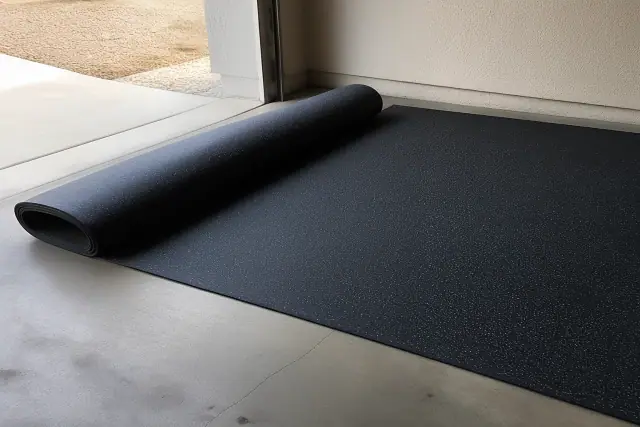
The rubber surface, moisture-blocking layer, and porous concrete as separate layers. This image helps make clear why the barrier belongs between the flooring and slab.
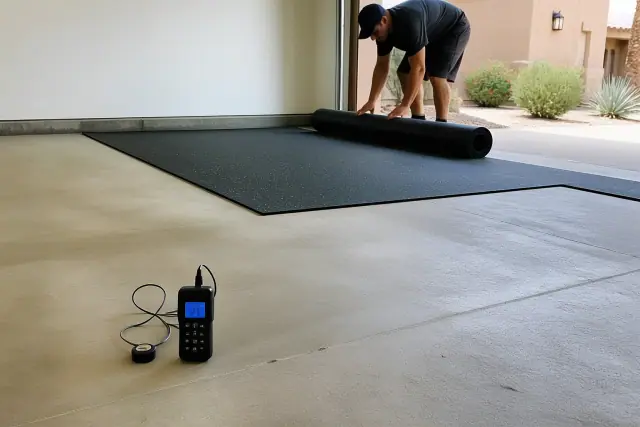
A clean, exposed slab being checked before any underlayment is installed. Testing provides the evidence needed to choose a sheet or epoxy barrier.
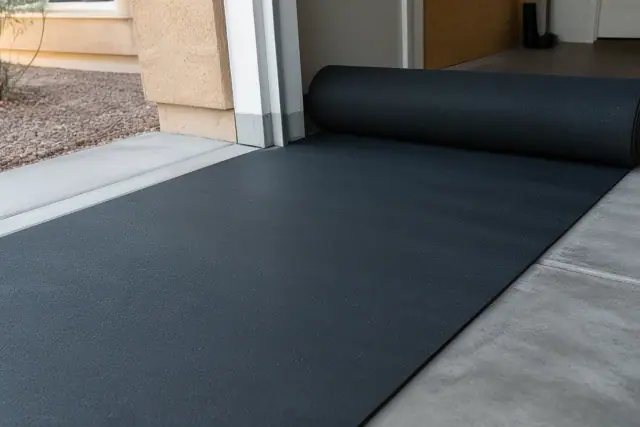
Overlapping polyethylene seams taped continuously beneath a long rubber run. Seams are weak points when they are too narrow, loose, or left unsealed.
Start with slab moisture testing. For typical residential and light commercial conditions, use a 6-mil polyethylene sheet with taped seams overlapping by a minimum of 6 inches.
Use a heavier 10-mil to 14-mil sheet with sealed seams, or move to a troweled epoxy system when moisture readings are elevated. Epoxy removes the seam-failure risk but adds material, labor, and cure time.
A new slab can require 60-90 days per inch of thickness to cure. Installing rubber too early can trap residual construction moisture even when a barrier is planned.
Do not treat dry indoor air as proof that the concrete is dry. Visible mold has appeared under unprotected rubber within 18-24 months, while adhesive breakdown, odor, bubbling, and discoloration can follow as moisture remains trapped.
| Installation Condition | Moisture Approach | Practical Direction |
|---|---|---|
| Rubber directly on a slab-on-grade | Test the concrete with ASTM F1869 or ASTM F2170. | Use 6-mil polyethylene as the baseline, with seams overlapped at least 6 inches. |
| Below-grade room or elevated slab reading | Plan for stronger moisture control. | Use 10-mil to 14-mil polyethylene or an epoxy barrier selected for the test result. |
| Raised, ventilated wood platform | Keep an air gap between the rubber and slab. | A slab-level vapor barrier is generally unnecessary when there is no direct slab contact. |
Concrete remains porous after it cures, so ground moisture can continue moving upward through a slab as vapor. Because rubber is largely impermeable, that vapor can collect beneath the flooring instead of dissipating into the room. Phoenix's dry ambient air does not remove this risk: irrigation near foundations, soil moisture, and the Salt River Valley's shallow caliche hardpan can hold or redirect moisture beneath a slab. The barrier protects the bond line by separating that vapor source from the rubber.
The final assembly depends on the slab's age and moisture history, whether the room is at or below grade, the rubber backing and format, and how the room is used. Rolled rubber needs continuous protection across long runs, while tiles and interlocking mats introduce different seam conditions. Garages with washing or vehicle runoff and commercial fitness areas need deliberate moisture management, while a raised wood platform with a ventilated air gap can remove direct slab contact. A vapor-permeable underlayment is used less often with rubber because the flooring's low permeability usually calls for a true barrier.
Can mold grow under rubber flooring? Yes, when trapped moisture and organic residue create a damp environment beneath the mat, although the rubber itself is not a food source. When can a barrier be skipped? A raised, ventilated wood platform or an upper-floor assembly with no concrete or ground contact may not need one, but trapping moisture against wood should be avoided. What belongs under rubber gym flooring? Start with slab testing, then use sheet polyethylene, a heavier or epoxy barrier for higher moisture, or a raised assembly when direct slab contact is intentionally eliminated. Similar moisture logic applies to LVP and laminate over concrete, but the specific flooring manufacturer's instructions should control the assembly.
Share the slab type, room use, and rubber flooring format. A moisture test and subfloor review can determine whether sheet polyethylene, epoxy mitigation, or a raised assembly fits the installation.