Installed Cost Range
Tile jobs average around $10 per square foot total. A standard 144-square-foot room may cost $800-$1,500, while a poured-in-place standard room can be about $2,300.
Rubber flooring installation in the Phoenix metro typically costs $3 to $15 per square foot installed, while poured-in-place systems can reach $16 per square foot for gyms and industrial spaces. Phoenix Rubber Flooring explains how rubber grade, thickness, subfloor preparation, and project type shape the final estimate.
Tile jobs average around $10 per square foot total. A standard 144-square-foot room may cost $800-$1,500, while a poured-in-place standard room can be about $2,300.
Cost rises from 6mm to 8mm and 10mm rubber, and recycled rubber generally costs less than virgin or natural rubber. Subfloor grinding, leveling, and moisture conditions also change labor and adhesive needs.
Compare quotes that identify removal, grinding, concrete leveling, moisture testing, adhesive, seam work, trim, and acclimation. The lowest material price is not the full installed cost when prep is required.
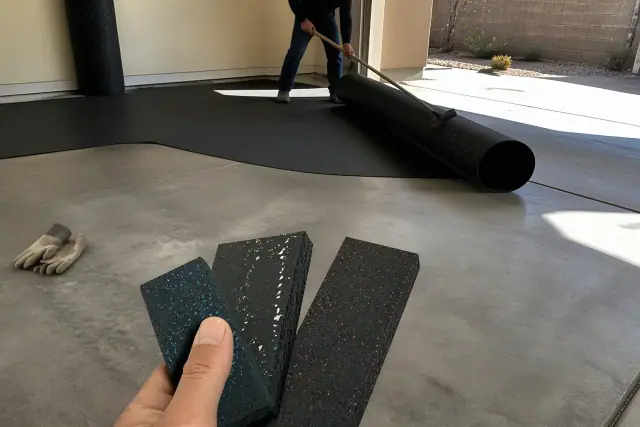
The three thicknesses side by side, with 6mm for light foot traffic, 8mm for moderate garage or playroom use, and 10mm for weight-room impact.
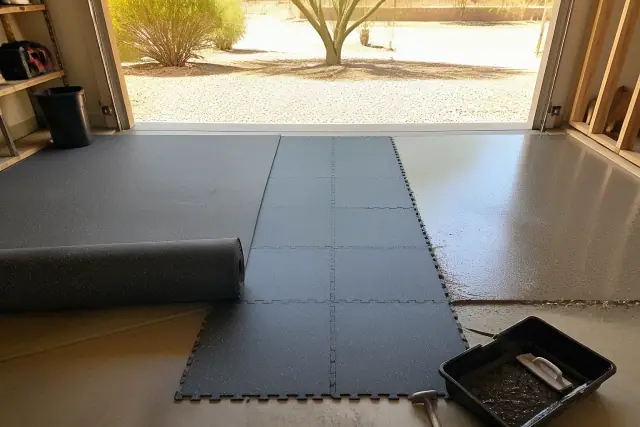
How rolled rubber reduces seams, interlocking tiles simplify small-room installation, and poured rubber creates a seamless cushioned surface.
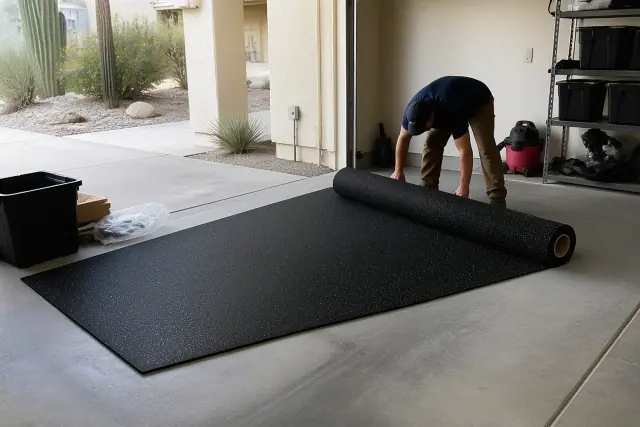
A slab-on-grade floor being checked for moisture, flatness, cracks, and surface residue before grinding, leveling, or adhesive work begins.
Midrange flooring installation across the Phoenix metro averages $10-$13 per square foot, with installation labor alone averaging around $2 per square foot.
A typical finished 500-square-foot area runs $3,500-$4,800. Budget rolled rubber may range from $1,500-$4,000, while commercial-grade tile or poured systems can reach $5,000-$7,500.
A 1,000-square-foot residential or light commercial installation typically costs $3,000-$15,000, with rubber grade and subfloor preparation driving much of the range.
Full strength-training gym and weight-room floors can range from $45,000-$220,000. Rolled systems average $66,000-$184,800 depending on rubber depth and sound-dampening requirements.
| Thickness | Tile | Roll | Poured-in-Place |
|---|---|---|---|
| 6mm | $4-$8 | $2-$4 | N/A |
| 8mm | $6-$10 | $4-$7 | $10-$13 |
| 10mm | $8-$12 | $6-$10 | $13-$16 |
Installed pricing combines material, old-floor removal, grinding, concrete leveling, adhesive, seam work, and trim as needed. Rubber generally needs 24 to 48 hours of acclimation in a climate-controlled space, and a typical 300-square-foot roll purchase is roughly $1,000 before professional installation, seam work, and trim.
Rubber thickness, recycled versus virgin or natural rubber, solid versus flecked or patterned finishes, and interlocking versus glued installation all affect cost. Poured-in-place work often runs $10-$15 per square foot depending on depth, color blending, and bonding agent, while commercial floors may require fire-rated materials, higher-traffic adhesives, or slip-resistant surfaces. Phoenix slab-on-grade construction, low humidity, expansive soils, and summer slab temperatures also influence moisture testing, leveling, acclimation, and adhesive choice.
Interlocking tiles are generally the easiest option for a small DIY garage or playroom, while rolled and poured floors require more specialized seam and adhesive work. Moisture trapped over concrete can allow mold to develop, so slab moisture testing and proper preparation matter before installation. Rubber is heavy, may have an initial odor that fades within days with ventilation, and can fade under prolonged direct UV exposure. Most residential rubber flooring projects in Phoenix do not require permits, though commercial work or structural changes may need city review.
Share the room size, intended use, preferred thickness, and known subfloor condition. An on-site assessment can identify moisture testing, grinding, leveling, and adhesive needs before the final price is set.