3/8 to 1/2 Inch for Most Gyms
This range balances shock absorption, durability, and cost for general home, weight-room, cardio, and light-commercial use.
Phoenix Rubber Flooring recommends 3/8 inch (8mm) to 1/2 inch (12mm) for most home gyms, weight rooms, and studio spaces in the Valley. The right thickness depends on drop height, load, subfloor, and noise, so a zone-by-zone plan protects the slab without overbuilding low-impact areas.
This range balances shock absorption, durability, and cost for general home, weight-room, cardio, and light-commercial use.
Low-impact bodyweight areas can use 1/4 inch, while regular barbell work and repeated drops call for 1/2 inch, 3/4 inch, or thicker rubber in the load-bearing zone.
Map each training zone, confirm the slab condition, and include moisture protection and expansion gaps before ordering one thickness for the entire room.
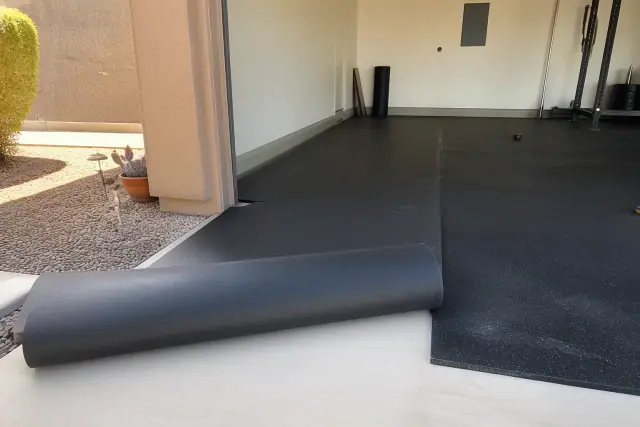
A garage gym with 8mm rubber over a concrete slab shows the common general-use setup. Racks and cardio equipment provide context without suggesting that this thickness is intended for repeated barbell drops.
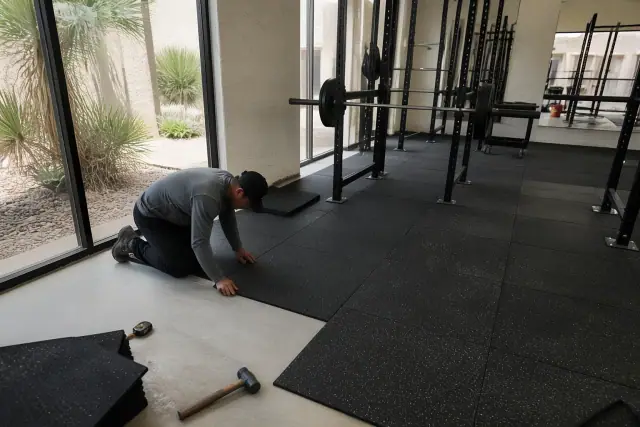
A side-by-side floor profile makes the difference between light-duty and heavy-impact areas visible. It also shows why one facility may need more than one rubber thickness.
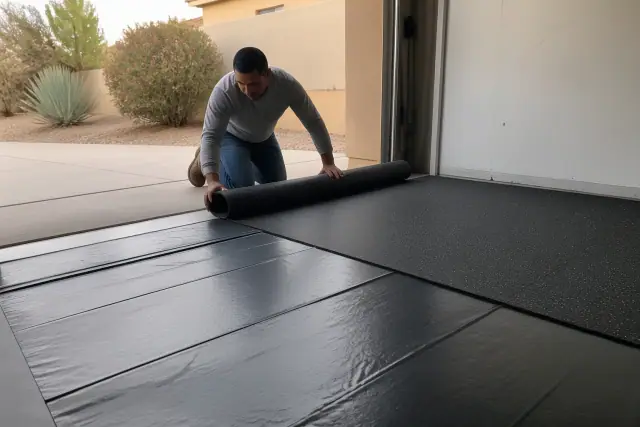
A cutaway of rubber, polyethylene barrier, and concrete slab reveals the moisture layer that finished floors hide. This detail matters because slab vapor can cause adhesive failure and curled edges.
3/8 inch (8mm) to 1/2 inch (12mm) fits most home gyms, general weight rooms, cardio areas, and light-commercial training floors.
1/4 inch (6mm) works for yoga, stretching, and cardio, but thinner tile can shift at seams under repeated traffic or rolling equipment.
3/4 inch (19mm) to 1 inch belongs under Olympic platforms and repeated heavy-drop zones; 3/4-inch drop mats can also reinforce a platform without thickening the surrounding floor.
Rubber density, measured in kg/m³, affects compression, while subfloor movement, moisture protection, expansion gaps, and noise transfer can change the final assembly.
| Thickness | Typical Zone | Approximate Cost per Sq. Ft. |
|---|---|---|
| 1/4 inch (6mm) | Yoga, stretching, and cardio | $1.50-$2.50 |
| 3/8 inch (8mm) | General home gym and weight room | $2-$3.50 |
| 1/2 inch (12mm) | Heavier weightlifting | $3-$5 |
| 3/4 inch (19mm) | Olympic platforms and heavy-drop zones | $4-$7 |
Roughly 70% of the residential and light-commercial projects quoted across Maricopa County fit 3/8 inch (8mm), with thicker rubber reserved for heavier or noisier zones. On slab-on-grade floors, a polyethylene barrier rated to at least 10-mil matters because ground moisture and July-to-September monsoon humidity can move vapor through older or uncured concrete, contributing to adhesive failure and edge curling.
Four variables drive the choice: drop height, weight load, subfloor type, and noise transfer. A 45-pound plate dropped from knee height creates a different impact than a controlled set-down, while 1/4-inch rubber can fully compress under a squat rack loaded past 300 pounds. Regular barbell work over 135 pounds generally calls for at least 1/2 inch, and frequent drops may require 3/4 inch or more. A second-floor gym may also need the thicker range for sound control, while a Salt River Valley slab usually benefits more from a moisture barrier and correctly sized wall gaps than from thickness alone.
Is 8mm rubber good for a gym? Yes, for bodyweight exercise, yoga, and moderate weight training up to roughly 75 pounds without repeated drops; heavier barbell work should move to 12mm or 19mm in the load zone. For interlocking tiles, 8mm to 12mm covers most home and commercial applications, while tile under 1/4 inch can shift at the seams. Three-quarter-inch flooring is the heavy-duty choice when plates over 45 pounds are regularly dropped, and 60-75 durometer hardness helps weight-room rubber resist permanent compression. In enclosed commercial spaces, low-VOC rubber is also worth considering for indoor air quality.
Share the equipment, heaviest loads, drop height, subfloor, and noise concerns for each area. A local flooring team can help compare 1/4-, 3/8-, 1/2-, and 3/4-inch options before you order material.