Typical Service Life
A correctly installed and regularly maintained rubber floor typically serves for 10 to 30 years. The application and rubber construction determine where it falls within that range.
Phoenix Rubber Flooring explains how material type, thickness, traffic, installation, maintenance, and Phoenix conditions shape a rubber floor's service life. A correctly installed, regularly maintained rubber floor typically lasts 10 to 30 years, but a low-traffic residential surface and a heavily used gym or warehouse can land at very different points in that range.
A correctly installed and regularly maintained rubber floor typically serves for 10 to 30 years. The application and rubber construction determine where it falls within that range.
Vulcanized, closed-cell rubber resists compression, moisture intrusion, and UV breakdown better than lower-grade bonded material. Thickness and daily traffic then determine how quickly the surface wears.
Moisture testing, acclimation, a suitable adhesive, and consistent cleaning protect the bond and finish. These steps help keep repairable wear from becoming premature replacement.
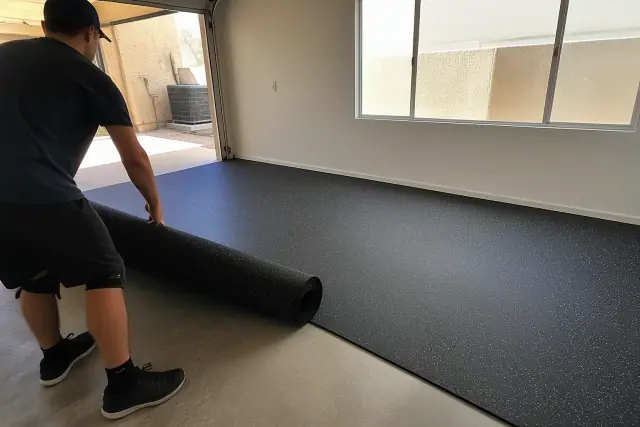
The transition from shaded flooring to a sun-exposed area near glass. This helps readers recognize where heat and UV-driven oxidation may appear first.
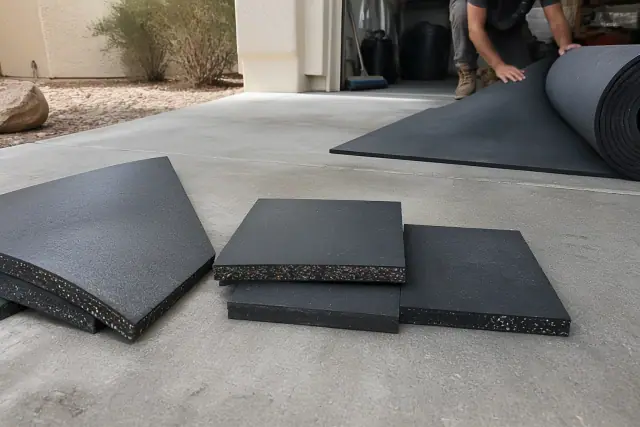
The denser structure of vulcanized rubber beside binder-based rubber. The comparison makes the durability difference easier to understand.
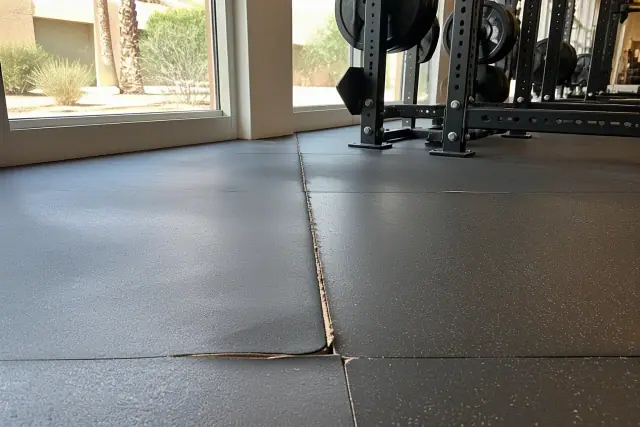
Curling edges, a visible wear path, and compressed rubber in a heavily used area. These conditions help distinguish cosmetic aging from replacement-level damage.
Low-traffic residential flooring and poured seamless rubber commonly reach 20 to 30 years when installation and care are sound.
Gyms and studios commonly fall in the 8-to-15-year range because of dropped weights and constant foot traffic. Warehouses need 1/2-to-3/4-inch rubber rated for forklift and pallet jack loads under OSHA guidelines to reach their expected 10-to-20-year range.
Vulcanized rubber generally lasts 10 to 15+ years, while polyurethane-bound rubber typically lasts 5 to 10 years before edge curling or surface degradation becomes more likely. Choosing the cheaper binder-based option upfront often means full replacement a decade sooner.
Clean weekly with diluted pH-neutral cleaner and rinse with clean water. High-traffic commercial surfaces can benefit from recoating or resealing every 3 to 5 years.
| Application | Typical Lifespan | Common Thickness |
|---|---|---|
| Residential flooring | 20 to 30 years | 1/4 to 3/8 inch |
| Offices and retail | 15 to 20 years | 3/8 inch |
| Gyms and studios | 8 to 15 years | 3/8 to 1/2 inch |
| Warehouses and industrial spaces | 10 to 20 years | 1/2 to 3/4 inch |
| Interlocking rubber tiles | 10 to 20 years | 3/8 inch |
| Rolled rubber sheets | 10 to 15 years | 1/4 to 3/8 inch |
| Poured seamless rubber | 20 to 30 years | Varies by system |
Rubber flooring has reached the end of its useful life when it can no longer retain structural integrity, cushioning, and an acceptable surface condition through repair. Quality rubber under normal conditions is often placed in a 20-to-30-year range, while some products fall within a 10-to-25-year window because of their manufacturing process. Correctly installed vulcanized and poured seamless rubber can also outlast vinyl, laminate, and carpet by a decade or more.
Phoenix heat and UV exposure can accelerate oxidation in non-UV-stabilized rubber near skylights and storefront glass. Summer surface temperatures near windows and doors regularly rise well above 100°F, while west-facing windows and loading dock doors can expose flooring to temperatures above 150°F. Monsoon season, typically June through September, adds humidity swings that can disrupt adhesive cure or trap moisture over an unsealed subfloor. Improper adhesive selection, skipped acclimation, and inadequate subfloor moisture testing can cause early curling or delamination; moisture testing under ASTM F1913 helps address that risk before installation. Desert dust and grit add abrasive wear, while material that is too thin for the traffic load is more likely to compress or tear at seams.
Rubber flooring's main disadvantages are its weight and initial odor; that odor often fades over several weeks, and ventilation during the first few days can help. Mold can grow beneath flat-backed flooring when moisture is trapped, even though the rubber itself does not absorb water, so a moisture-rated adhesive and subfloor testing matter. Avoid ammonia, bleach, and solvent-based cleaners because they can degrade or discolor the compound. Replacement becomes more likely when cracking, permanent edge curling, delamination, persistent odor, visible wear paths, or unrecoverable loss of cushioning appears.
Share how the space is used, the flooring type and thickness, and any visible wear. An in-person evaluation can compare seam condition, cushioning, subfloor and adhesive bond, moisture exposure, and maintenance history before deciding whether repair or replacement makes sense.