Proudly serving Phoenix, Mesa, Chandler, Scottsdale, Gilbert, Tempe & surrounding areasCall or Text 24/7: +1 (480) 916-7433

Rubber Flooring Installation in Phoenix, AZ for Residential and Commercial Fitness Spaces

Phoenix Rubber Flooring serves Phoenix, Arizona, with rubber gym flooring installation, repair, replacement, and material supply for home and commercial fitness spaces. We install interlocking tiles, rolled rubber, and poured systems for garage gyms, basements, apartment fitness rooms, CrossFit boxes, weightlifting platforms, and yoga studios. Each recommendation is matched to the space, equipment load, slab condition, and budget.

Phoenix heat can push concrete slab temperatures past 140 degrees Fahrenheit, while monsoon humidity and irrigation moisture can undermine adhesives that were not selected for local conditions. Slab-on-grade construction also makes moisture testing and crack repair important before installation begins. We account for expansion at walls and thresholds, direct UV exposure, and the impact generated by racks, dumbbells, and lifting platforms. That preparation helps prevent early curling, buckling, and seam failure.

Home gym projects commonly cover 200 to 600 square feet and can often be completed in a single day, while larger commercial facilities require heavier materials and more coordination. Call to discuss the space, equipment, slab condition, and material options before requesting a firm estimate.

5-star rating4.9/5 Average Rating - 20+ Years of Experience - Phoenix Rubber Flooring Specialists - Residential & Commercial
Rubber Flooring Services

Rubber Flooring Options for Phoenix, AZ

Phoenix spans more than 517 square miles, with more than 1.6 million residents in the city and roughly 5.19 million across the broader metro. We work throughout Arcadia, Ahwatukee, Laveen, Desert Ridge, Deer Valley, Encanto, Willo, Maryvale, and the rest of Maricopa County. Customers planning projects farther east can also review our service information for Mesa, AZ.

Gym and Home Gym Rubber Flooring

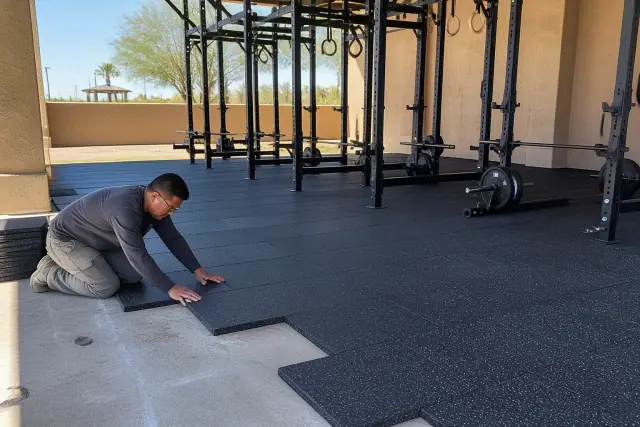
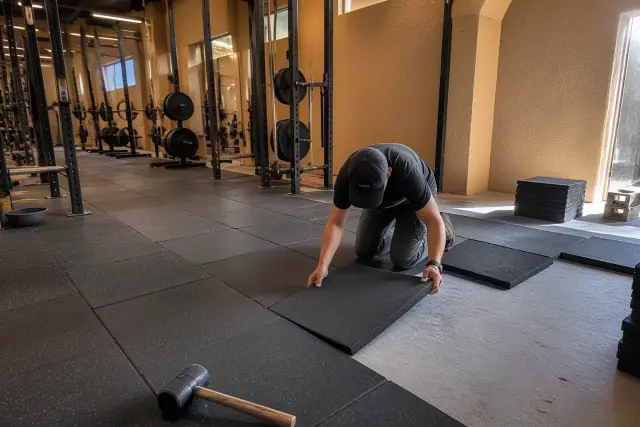
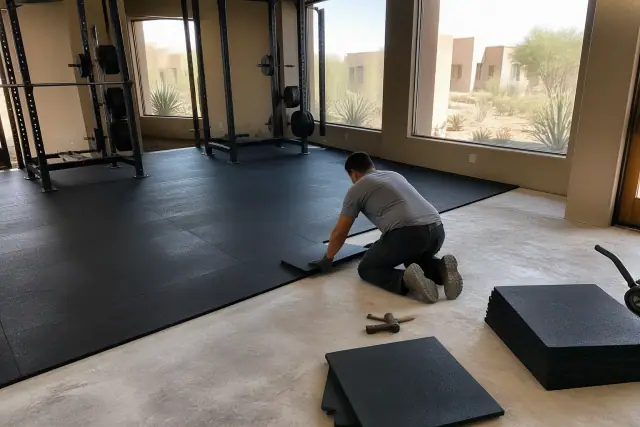
Technician installing rubber gym flooring tiles on a concrete slab in a Phoenix, AZ fitness facility.

Rubber gym flooring is selected around the training space, equipment loads, concrete condition, and desired balance of impact control, appearance, and odor profile. Options include interlocking tiles, rolled rubber, and poured systems for home gyms, CrossFit boxes, weightlifting platforms, and yoga studios. Explore Service

Explore Service

Garage Rubber Flooring Installation

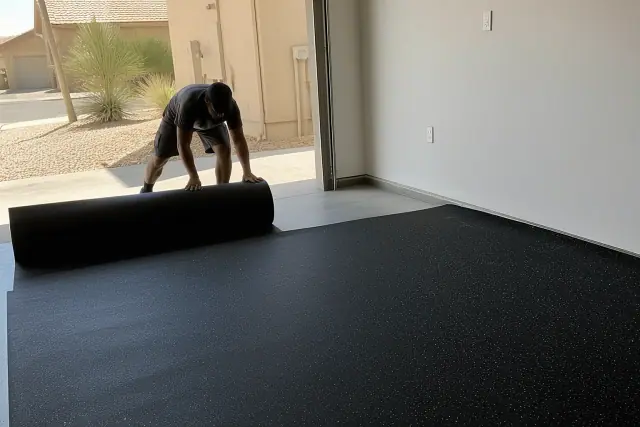
Worker unrolls recycled rubber flooring across a concrete garage floor in Phoenix, AZ.

Phoenix garages often combine unfinished concrete, extreme heat through uninsulated doors, and oil or chemical staining from parked vehicles. We clean and repair the slab, test for moisture, and fit interlocking tiles or rolled rubber around equipment and thresholds. Explore Service

Explore Service

Basement Rubber Flooring Installation

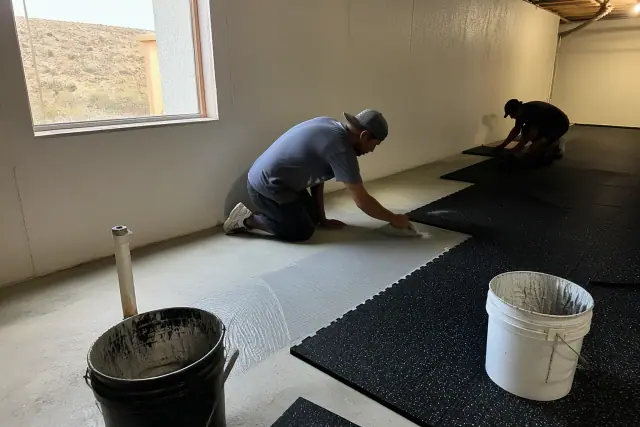
Construction crew installing rubber flooring in a Phoenix, AZ basement.

Basement training areas need a rubber surface matched to the slab, moisture conditions, room use, and equipment load. Material selection and careful subfloor preparation help create a stable surface for cardio, general fitness, or weight training. Explore Service

Explore Service

Rolled Rubber Flooring Installation

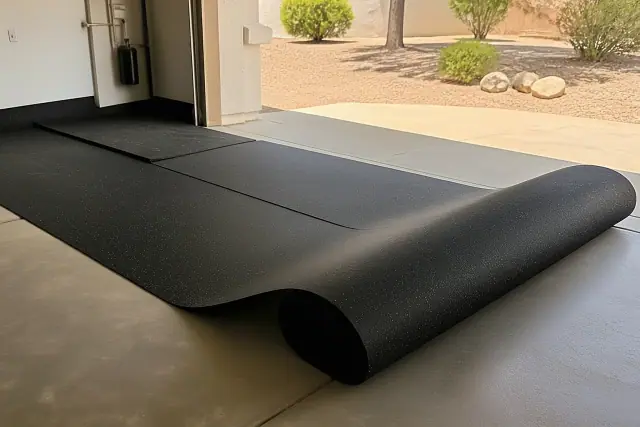
Recycled rubber flooring being unrolled across a concrete garage floor in Phoenix, AZ.

Rolled rubber creates broad, continuous coverage for training areas and can be specified in recycled, low-odor, or virgin rubber formats. Fully adhered layouts require a clean slab, compatible high-heat adhesive, planned expansion space, and tightly finished seams.

Rubber Floor Tile Installation

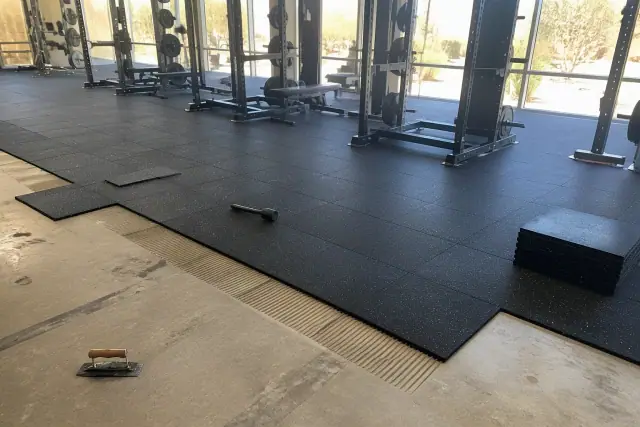
Contractor installing heavy-duty rubber floor tiles in a Phoenix, AZ fitness center free-weight zone.

Interlocking rubber tiles provide a practical option for garage and home gyms because damaged sections can be replaced individually. We size tile thickness and density to the activity, then lay out edges and transitions to reduce movement, tenting, and trip points.

Commercial Rubber Flooring

Contractor installing heavy-duty rubber floor tiles in a Phoenix, AZ gym.

Commercial installations serve CrossFit boxes, personal training studios, corporate fitness centers, and multi-tenant facilities. Material selection considers heavy continuous traffic, ASTM E648 fire testing, OSHA 1910.22 walking-working surface requirements, and 3/4-inch-or-greater rubber in repeated dead-drop zones.

Playground Rubber Surfacing

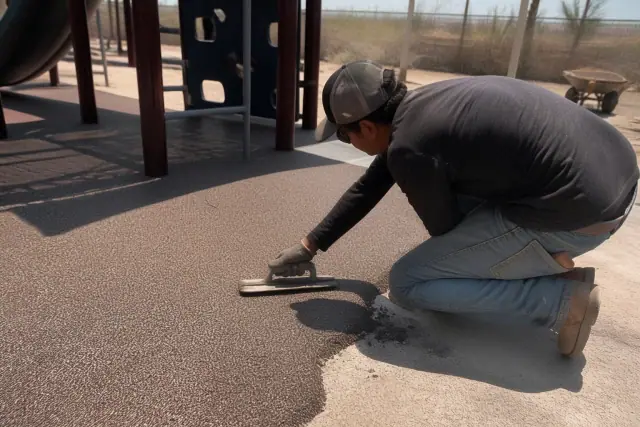
Technician troweling rubber safety flooring around play equipment at a job site in Phoenix, AZ.

Playground rubber surfacing requires material thickness and substrate preparation matched to expected use and outdoor exposure. Phoenix heat, UV, moisture, perimeter details, and surface texture should all be evaluated before a rubber system is selected.

Industrial Rubber Flooring

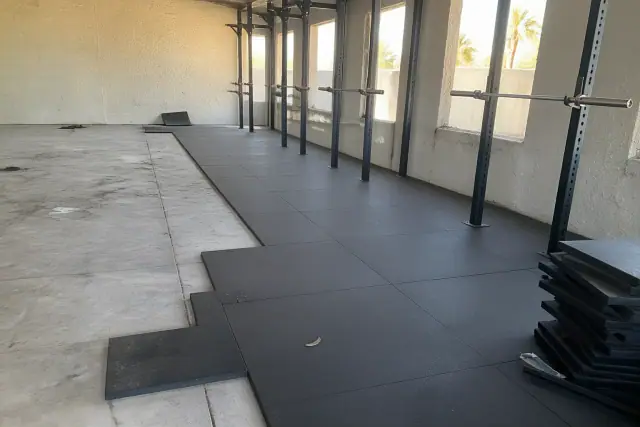
Technician installing heavy-duty rubber floor tiles in a Phoenix, AZ gym with squat racks and concrete walls.

Industrial rubber flooring choices depend on traffic load, standing and walking use, slab condition, and the demands placed on each work zone. We evaluate density, surface texture, transitions, and cleaning needs so the floor specification fits its intended use.

Anti-Fatigue Rubber Flooring

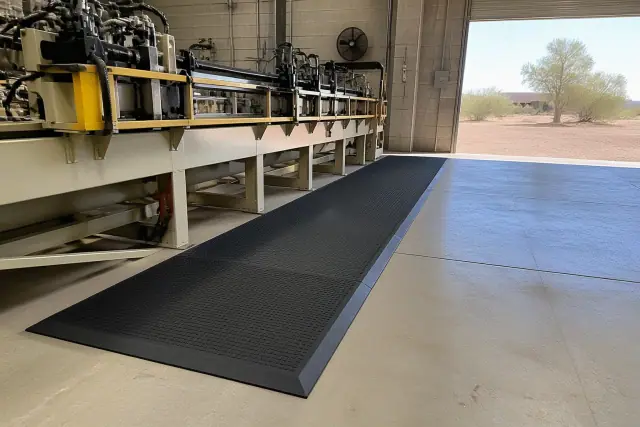
Anti-fatigue rubber mats installed by industrial machinery on a concrete floor in Phoenix, AZ.

Anti-fatigue rubber flooring can support standing work areas when density, texture, thickness, and edge transitions are chosen for the space. Heat exposure, cleaning practices, and nearby equipment also influence which rubber format is appropriate.

Rubber Flooring Repair and Replacement

Technician installing heavy-duty rubber floor tiles in a Phoenix, AZ fitness center free weight zone.

We address loose seams, curling edges, adhesive failure, isolated tile damage, and UV-worn sections. When repair is no longer practical, we remove the failing floor, clean adhesive residue, inspect for moisture damage, and install a replacement matched to current use.

Flooring Selection

How to Choose Rubber Flooring for a Phoenix Gym

The right floor depends on the concrete beneath it, the loads above it, and the heat, moisture, sound, and code conditions around the room. Comparing those factors before choosing a product helps avoid paying for the wrong thickness, adhesive, or material grade.

Start with the Concrete Slab

A slab may hold moisture from irrigation seepage, incomplete curing, or seasonal humidity even in the desert. Testing with ASTM F1869 or an in-situ probe, followed by crack and low-spot inspection, shows what preparation and installation method the floor needs.

Match Thickness to Equipment Loads

General residential fitness areas commonly use 3/8- to 1/2-inch rubber, while commercial floors typically range from 1/2 inch to 1 inch or greater. Olympic lifting, CrossFit, and dead-drop zones often call for denser material at least 3/4 inch thick.

Plan for Heat and Direct Sun

Phoenix records more than 100 days per year above 100 degrees Fahrenheit, and an uninsulated garage slab can exceed 140 degrees. High-heat adhesive, expansion tolerances, and UV-stabilized rubber help protect floors exposed through south- or west-facing doors and windows.

Compare Rubber Material Options

Recycled rubber offers economical coverage, while virgin rubber and low-odor rolls can be better suited to enclosed living areas. Color-flecked tiles and GREENGUARD Gold-certified low-emission options provide additional choices for appearance and indoor air concerns.

Account for Noise and Property Rules

Apartment gyms and upper-floor fitness rooms may need sound-dampening underlayment beneath the rubber surface. HOA requirements, lease noise clauses, equipment vibration, and floor transitions should be reviewed before material is ordered.

Review Commercial Use Requirements

Commercial facilities face heavier traffic and more formal code review than home gyms. Fire-test performance, walking-working surface requirements, tenant-improvement permitting, equipment anchors, drains, and daily operating schedules can all affect the specification.

Phoenix Flooring Problems

Common Rubber Flooring Problems in Desert Properties

Heat cycling, moisture vapor, UV exposure, dust, and uneven concrete can shorten the life of an otherwise durable rubber floor. A careful assessment separates a material problem from a slab, adhesive, layout, or maintenance problem before repair or replacement begins.

Request Floor Assessment

Heat Expansion and Adhesive Failure

Rubber expands as slab temperatures rise. Without heat-rated adhesive and expansion space at walls or thresholds, tiles can buckle or tent during the first hot season and adhered seams may release.

Slab Moisture and Vapor

Irrigation seepage, monsoon humidity, or residual curing moisture can move through slab-on-grade concrete. Trapped vapor weakens adhesive bonds over time, which is why dry-looking concrete still needs objective testing.

Curling Edges and Open Seams

Curling and seam separation commonly trace back to heat cycling, inadequate bonding, missing expansion tolerance, or poor original preparation. Individual tiles or localized rolled sections can often be repaired without replacing the entire floor.

UV Fading and Brittle Rubber

Direct desert sun through garage doors and windows accelerates fading and surface brittleness. An unprotected installation may deteriorate well before the 20-years-or-more service life that properly selected and maintained rubber can provide.

Cracked or Uneven Concrete

Cracks, spalling, paint, sealers, and low spots can telegraph through thinner rubber and interfere with adhesive. Older Maryvale and Laveen homes built in the 1970s and 80s may still have original uneven slabs that require added preparation.

Monsoon Water, Dust, and Grit

Monsoon season runs roughly June through September, bringing sudden humidity, wind-driven water, and haboob dust through open garage doors. Sealed seams and a cleanable texture help keep standing water and abrasive grit from lingering around equipment and bare feet.

Why Choose Us

Why Choose Phoenix Rubber Flooring for Local Projects?

Our recommendations reflect the way Phoenix slabs, desert sun, monsoon moisture, and local building types affect rubber flooring. We evaluate the room and intended use before specifying a product, then carry those findings through preparation, installation, finishing, and care guidance.

Phoenix Construction Knowledge

We work with post-tension slabs common in newer suburbs, older block-and-slab homes in Encanto and Willo, and ground-floor commercial units across valley retail centers. That context matters when drilling near post-tension cables, repairing older concrete, or scheduling work around 100-plus-degree afternoons.

Thorough Slab Preparation

Every project begins with measurement, equipment review, moisture testing, and a close look at cracks, low spots, sealers, paint, or curing compounds. Grinding, cleaning, and patching are selected around what the assessment finds rather than treated as interchangeable steps.

Residential and Commercial Experience

Project experience ranges from single-car garage conversions to apartment fitness rooms, studios, and full commercial gyms. We coordinate permitted tenant improvements with the City of Phoenix Development Services Department when required and stay current on Arizona Registrar of Contractors requirements.

Installation Process

Our Rubber Flooring Installation Process in Phoenix

A defined process connects the floor specification to the actual slab and training plan. Residential projects under 600 square feet are often completed in one day, while larger commercial spaces generally take one to three days depending on size, preparation, anchors, drains, and custom cutting.

01.

On-Site Assessment and Measuring

We measure the room, locate transitions and fixed obstacles, review racks and lifting zones, and discuss how the space will be used. That information establishes square footage, equipment loads, and layout priorities.

02.

Concrete Moisture Testing

The slab is tested with ASTM F1869 or in-situ probe methods as conditions require. Moisture results help determine whether a fully adhered roll, interlocking layout, or additional mitigation is appropriate.

03.

Slab Cleaning and Repair

We grind or clean away sealers, paint, oil residue, and curing compounds that could interfere with the bond. Cracks, spalling, and low areas are patched so they do not telegraph through the finished rubber.

04.

Material and Layout Selection

Interlocking tiles may suit a general home gym, while rolled rubber, virgin rubber, thicker platforms, or sound-dampening underlayment may better fit heavier, enclosed, or upper-floor spaces. Available rubber products range from about 3/8 inch to 1 inch or greater.

05.

Installation and Edge Finishing

The flooring is cut around walls, anchors, and drains, then secured using the planned interlocking or adhesive method. We finish seams, provide expansion space, and install transition strips at doorways and exposed edges.

06.

Walk-Through and Care Guidance

The final walk-through covers seams, transitions, curing considerations, routine cleaning, and chemicals that can degrade rubber. Clear maintenance guidance helps control rubber dust, preserve edges, and protect the expected service life.

Project Applications

Rubber Flooring Outcomes for Phoenix Homes & Fitness Facilities

Case Study 1: A single-car garage conversion can use fitted interlocking tiles or rolled rubber over a repaired slab, with expansion space at hot doorways and thickness matched to racks or free weights.

Case Study 2: An apartment or upper-floor fitness room can combine low-odor rubber with sound-dampening underlayment to address enclosed-space comfort, equipment vibration, and HOA or lease noise requirements.

Case Study 3: A commercial facility of 1,000 square feet or more can use heavier rubber, often 3/4 inch or greater in platform zones, with code review and a one-to-three-day installation window built into project planning.

Plan Your Floor

Schedule a Phoenix
Rubber Flooring
Consultation

Tell us whether you are planning a home gym, garage conversion, apartment fitness room, studio, or commercial training space. We will review the slab, equipment, heat and moisture exposure, material preferences, and budget before preparing a firm project quote.

Phoenix Flooring Help

FAQs About Rubber Gym Flooring in Phoenix, AZ

These answers cover pricing, thickness, installation timing, slab preparation, material selection, repairs, and climate factors for Phoenix home and commercial gym floors.

Call Our Flooring Team

Rubber products generally run $3 to $12 per square foot installed, while premium commercial systems with specialty subfloor preparation can reach $26 per square foot. Entry-level interlocking tiles may run $1.50 to $5 per square foot, a small dedicated room may require $230 to $380 in materials before labor, and basic mat-style products can be closer to $1 to $3 per square foot. In the residential and commercial comparison, residential installs range from $1.50 to $6 per square foot and commercial work from $4 to $12. A firm quote follows an on-site review of square footage, slab condition, material grade, and intended use.

For many home gyms, interlocking rubber tiles between 1/2 and 3/4 inch thick balance impact control, replaceability, and cost. Virgin rubber or low-odor rolled material can be more comfortable in enclosed rooms, while lighter recycled rolls suit cardio and general fitness areas. Olympic lifting and dead-drop use call for denser, thicker material.

General fitness and cardio spaces commonly use 3/8- to 1/2-inch rubber. Weightlifting and CrossFit areas usually need 3/4 inch or thicker, while commercial systems can range from 1/2 inch to 1 inch or greater. Thickness should be matched to impact, equipment weight, subfloor, and sound-control needs.

Most residential garage or home gym projects from 200 to 600 square feet can be completed in a single day. Larger commercial installations, often 1,000 square feet or more, generally take one to three days. Extra slab repair, custom cuts, equipment anchors, or floor drains can extend the schedule.

Slab-on-grade concrete can retain vapor from irrigation seepage, monsoon humidity, or incomplete curing even when the surface looks dry. ASTM F1869 or in-situ probe testing provides information needed to select an adhesive or installation method. Skipping that step can lead to loose seams and adhesive failure.

Rubber can perform well when the layout and materials account for local temperatures. Phoenix has more than 100 days per year above 100 degrees Fahrenheit, and garage slabs can exceed 140 degrees, so high-heat adhesive and expansion space are important. Direct sun may also call for UV-stabilized rubber.

Individual tiles, loose seams, curling edges, and localized rolled-rubber sections can often be repaired. Replacement becomes more practical when damage is widespread, the material has become brittle from UV exposure, or moisture has compromised a large bonded area. The slab should be inspected before either approach is chosen.

Rubber flooring can last 20 years or more with appropriate material selection, preparation, installation, and care. Direct UV exposure, incorrect cleaning chemicals, standing water, and failed adhesive can shorten that service life. Routine inspection of seams and edges helps identify local repairs early.

Options include interlocking recycled-rubber tiles, rolled rubber, virgin rubber, poured systems, color-flecked tiles, and low-odor materials. GREENGUARD Gold-certified low-emission products are also available for projects where indoor chemical emissions are a priority. The right format depends on room use, impact load, ventilation, and slab condition.

Commercial facilities may need flooring that meets ASTM E648 fire-test standards and OSHA 1910.22 walking-working surface requirements. Tenant improvements can also involve City of Phoenix Development Services Department review or permitting. Traffic level, drop zones, anchors, drains, and transitions should be included in the specification.

Virgin rubber and low-odor rolled products reduce the off-gassing smell often associated with recycled rubber. Ventilation and a low-emission product, including a GREENGUARD Gold-certified option where appropriate, can further improve an enclosed spare room or apartment fitness area. Odor profile should be considered before material is ordered.

Routine cleaning should remove rubber dust and desert grit without harsh chemicals that degrade the surface. Loose seams can be re-seated, exposed edges can be resealed, and standing water should be removed promptly. Care instructions vary by material and adhesive, so follow the guidance provided at the final walk-through.

Rubber flooring paired with sound-dampening underlayment can reduce equipment vibration and transmitted noise. Low-odor or virgin rubber is also useful in enclosed high-rise and mid-rise rooms. HOA rules and lease noise clauses should be reviewed before selecting thickness or installing anchors.

Service coverage includes Phoenix neighborhoods such as Arcadia, Ahwatukee, Laveen, Desert Ridge, Deer Valley, Maryvale, Encanto, and Willo. The draft also identifies Scottsdale, Tempe, Mesa, Chandler, Gilbert, Peoria, and Glendale, along with broader Maricopa County. Project location and scope can be discussed during the initial call.

The on-site assessment confirms square footage, slab condition, equipment loads, moisture, and intended use before material and preparation costs are finalized. Although DIY kits may appear near $1.12 per square foot, inadequate preparation or seaming can force a tear-out within a year or two. The project quote is based on the actual floor rather than a remote assumption.